Oporto Sports Series: Exclusive Interview with Chris Mortley

Chris Mortley, Senior Communications Manager at Oporto Sports, took the time to discuss his role at the sports marketing agency, the most valuable lessons he’s learnt while working in the sports industry, and how he feels sports content could evolve in the foreseeable future.

Question 1: Chris, thanks for joining me on this interview. How did your career in sport begin?

“I was the club’s press officer for four seasons that have gone down as the highest point in the club’s history.”

Chris mortley

When I (very quickly) realised that the prospect of playing sport professionally wasn’t an option, I was drawn to the potential of working within the media, focusing specifically on sport. Initially aspiring to be a sports journalist with dreams of working for a national newspaper or publication, I studied Media and Sports Journalism at the University of Huddersfield. During that time, I was fortunate enough to have the opportunity to work within the media and communications department at Huddersfield Town Football Club. At that time, my career aspirations altered slightly, as I enjoyed the blend of journalism and PR that working within a communications department offered. Before graduating, I contacted many professional football clubs, with a cover email and CV, regarding opportunities available. A few clubs replied, but I decided to stay within Yorkshire and commenced my career with Doncaster Rovers, where I was the club’s press officer for four seasons that have gone down as the highest point in the club’s history.

Question 2: What are you responsible for in your role at Oporto Sports?

As Senior Communications Manager, I oversee all communications accounts held by the agency. Whilst I don’t directly manage each individual account, I manage a selection and support all in the composition of news articles, media releases and website maintenance, in addition to promoting news and initiatives through social media platforms and e-communications.

On (thankfully) rare occasions, I will also provide crisis management support to our clients. When not directly working in this area, I support colleagues in the same matters and act as the senior client-facing member of the agency.

Question 3: What have been the most valuable lessons you’ve learnt by having a broad clientele?

“Every client is different, and it’s important to recognise that from the jump.”

Chris Mortley

We may very well work with clients in the same field, but their audience and key drivers are all different. That should be recognised immediately and time invested in getting to know and understand the landscape of the client’s service and customer base.

Attention to detail can never be understated. Content and storytelling are key – and the quality of content needs to be at the highest possible level. The accessibility that online platforms and social media provide means with a lot of content is available to a huge audience. Therefore, I feel that attention to detail and creating content of an accurate high quality is key to standing out above other material on offer.

Chris Mortley, Senior Communications Manager, interviewing England fast bowler, Mark Wood

When you’re working with a variety of clients, with a lot of plates to spin, working too fast can impact that quality – so slow down and take a little extra time to ensure that what you’re putting out there is the best it can be. If not, it could potentially create a poor representation of the client.

Question 4: From your perspective, what makes an effective content strategy?

I’m very lucky to work within the field of sport, from grassroots through to professional levels. Why do I say that? Because I am a huge sports fan, it is why I got into the industry in the first place. Therefore, before commencing work on a content strategy, I ask myself these questions: What would I enjoy? What would I engage with? What would I want to see? From there, I provide a list of the key drivers in content that I incorporate into a strategy across all platforms.

Question 5: What have been the biggest challenges that have benefitted your career thus far?

Crisis comms always provide a great opportunity to learn lessons. You possibly don’t feel that way at the time, but when you have the chance to review and reflect on how those situations played out, with the benefit of hindsight, it’s invaluable when faced with the next scenario. Working for high-profile clients has also provided a challenge in the sense that the profile of your work and potential scrutiny are heightened. In that sense, adapting to greater attention to detail and quality, alongside multi-tasking and time management, has provided a huge professional benefit.

Question 6: How do you see content creation in sports changing in the future?

I think we’ve already started seeing the emergence of fan-created media and the potential audience it can generate, with Arsenal Fan TV being the obvious example. I feel that we will see more content created across the board that looks to engage more with the audience by being reflective of the audience, either through social media interaction or as guests. Already we’re seeing content created by Sky Sports with Saturday Social, and more features are focused on generating content through audience engagement. I’m interested in seeing how professional clubs and organisations adapt to this change without impacting the image and perception they’re required to provide.

Oporto Sports Series: Exclusive Interview with Sam Pinkham

Sam Pinkham, the Communications Manager at Oporto Sports, has generously taken the time to share the inspirations behind starting his sports career, lessons he’s learnt throughout his time working for an award-winning sports agency alongside how he feels sports content could evolve in the future.

Question 1: Sam, many thanks for joining me in this interview. How did your career in sport begin?

I graduated from De Montfort University in 2013 with a degree in Media Studies, alongside relevant experience in the media industry with local newspapers, radio and PR agencies. In September of that year, I successfully applied to join the communications team at Oporto Sports, where I have since been able to develop my skillset and enjoy some fantastic experiences across a wide range of clients and projects. 

Question 2: What are you responsible for in your role at Oporto Sports?

In my role with Oporto Sports, I work closely with several sports organisations to manage their marketing and communications activities. This involved supporting with copywriting, website management, social media marketing, email marketing, general PR and media support, helping our clients to tell stories and communicate with their target audience, using the right channels at the right times.

Question 3: What are the biggest lessons you’ve learnt from working with various clients?

“No two clients are the same”

Sam pinkham

While the expression ‘no two clients are the same’ is true in many cases, especially within the sports industry, from experience, I have also found that lots of work and best practices can be applicable across multiple projects and clients, even in different fields and subject areas, as long as it is implemented in the right way. As a business, we tailor our services to individual clients in a way which suitably meets their requirements, but the fundamental principles behind high quality, accurate and creative work are something that stays consistent throughout.

Question 4: From your perspective, what makes an effective content strategy?

Identifying a target audience and keeping them at the forefront of any plans behind a content strategy is always a good starting point. You can have high-quality, eye-catching content, but if it’s delivered to the wrong channel at a time when your target demographic is largely inactive, engagement levels will always suffer. It’s also important to learn from previous content outputs, assessing what worked well and why it worked well, and how that can be delivered again in a variety of ways to generate the same high level of results. 

Question 5: What have been the biggest challenges that have benefitted your career thus far?

Entering this role with Oporto Sports straight after graduating from university and being trusted to manage client relationships, projects and my own workload was a challenge, but it was also the best thing for me at that moment in time. When new challenges come along you don’t always get everything right, but if you can learn and use them to your benefit in the future, then that’s the most important thing. I feel very fortunate to work in an industry that genuinely interests me, with clients I’m passionate about delivering results for, alongside fantastic colleagues who have all helped me immeasurably during the early part of my career in my first full-time role.

Question 6: How do you see content creation in sport changing in the future?

“It’s clear that social media platforms are increasing their influence over content delivery to engage with individual users based on their behaviours and interests.”

Sam pinkham

With platforms such as Instagram and TikTok experiencing such popularity and growth in recent years, it’s clear that the appetite for fast-paced, visual content is only going in one direction.

Regarding the delivery of content, more than the content creation itself, I find it interesting how social media platforms use algorithm systems to predict and provide content to users automatically, rather than replying on user input via a search function or similar. Related articles on news outlet websites and suggested videos on YouTube have been around for a while, so the concept isn’t new, but with the development of technology and with the paid advertising space making an impact, we’re seeing more of these practices in place now. Suggested content on Twitter due to a previous Tweet you liked, for example. The ‘For You Page’ on TikTok which delivers content based on how previous content has been consumed – how long you watched the video for, whether you liked it or made a comment, or if, on the other hand, you skipped through before it ended.

It will be interesting to see how this develops in the future, but it’s clear that social media platforms are increasing their influence over content delivery to engage with individual users based on their behaviours and interests.  


I hope you enjoyed that interview with Oporto Sports’ Communications Manager, Sam Pinkham, let me know what you found most insightful from this feature.

Oporto Sports Series: Exclusive Interview with Gary Webster

Gary Webster, the Creative Director at award-winning sports marketing agency, Oporto Sports, took the time to discuss how his illustrious career began, what were the most insightful lessons he learnt from managing a diverse clientele alongside his forecasted thoughts on the future of sports content.

Question 1: Gary, thanks for joining me on this interview. How did your career in sport begin?

Whilst I was finishing my University degree in Digital Media, I applied for my first job in Leeds with ‘Brazilian Soccer Schools’ and managed to get it. It was a very quick introduction into the football industry, working with professional coaches and former world-class footballers in Sócrates, Careca and Lee Sharpe. I also became involved in running the co-owned non-league side Garforth Town, and experienced the business, administration and marketing aspects of running a football club. 

Question 2: What are you responsible for in your role at Oporto Sports?

My title is Creative Director, but I manage the day-to-day running of the business, coordinating the staff where necessary, and providing some of the design/websites/social media assets for the company and clients.

Question 3: What are the biggest lessons you’ve learnt from working with various clients?

Although the majority of our clients are within the sports industry, they do vary between individuals, private companies, and governing bodies. Therefore they all have different requirements in not only their work but also the level of detail in the briefs that you can get and the turnarounds. The challenge is trying to refine the process of the brief to sign-off, to make the turnarounds as efficient for the client, within the budget and for our own workloads. Also, a lot of the work is seasonal, so trying to ensure the workloads are as balanced as possible throughout the year is something we always need to bear in mind.

Question 4: From your perspective, what makes an effective content strategy?

I always feel that whilst you want to aim for a really positive impact, it needs to be within a realistic return of investment. I’ve participated in some very elaborate campaigns in football (such as kit launches), but some of the times I have felt that you could invest and risk less outlay on more subtle marketing and media streams, and certainly in more timely fashion. I think the growth of TikTok and some clubs getting their players providing the videos/promo have proved that sometimes less is more especially if you end up with just as effective campaigns for less resource.

Question 5: What have been the biggest challenges that have benefitted your career thus far?

Starting out with just my business partner and a few contacts after a few years’ out of University, within the recession of 2009, taught us quite quickly how competitive the sports industry can be without the contacts and leads. However, self-promotion with our own Leicester focussed sports publication soon helped us open doors. That discipline of self-promotion and speculating has kept with us and is something we try and advise to clients, rather than the typical, passive advertising methods.

Question 6: How do you see content creation in sport changing in the future?

Witnessing first-hand how increasingly successful bite-sized media is with my kids, I feel that accessibility will be key. Future generations want more tailored content at convenient times, so the success of streaming platforms is just the start. It’s going to lead to content that is adaptable and interactive – maybe not full metaverse just yet, but individuals and organisations will need to provide more varied content that can be selected and adapted to more detailed preference levels. Quality will probably need to subside to quantity, but I think future generations won’t mind this if they get a great more targeted content without having to search for it.   


I hope you enjoyed this interview with Gary, let me know what your most insightful part of this feature was!

Israel Adesanya x Dan Hooker collaboration: the influence of athlete-driven marketing in combat sports

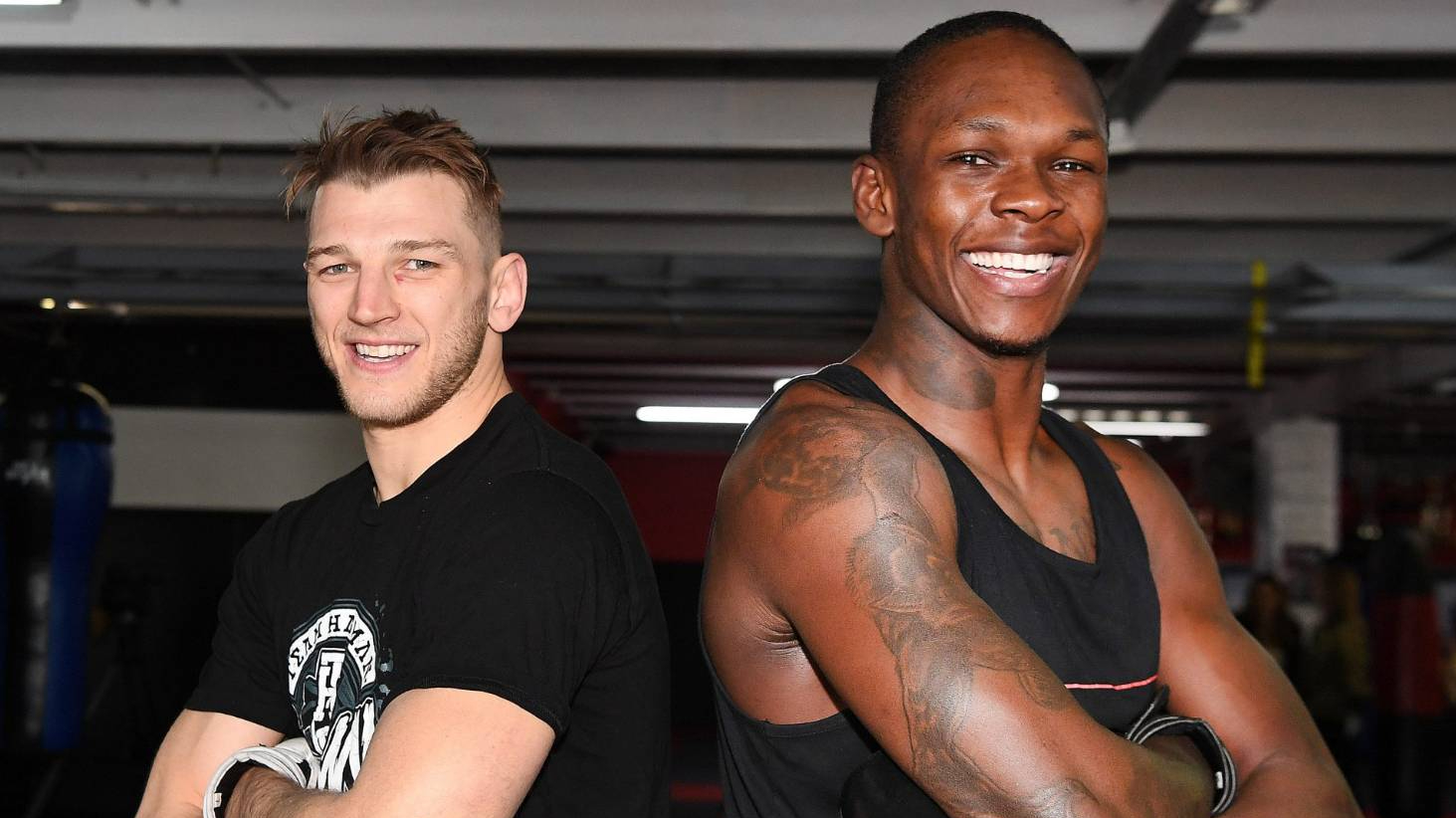
UFC Middleweight champion, Israel Adesanya, and lightweight veteran, Dan Hooker, linked up on Israel’s YouTube channel to share what future UFC match-ups they’d like to see.

The match-ups both athletes agreed on included the following.

Strawweight division

Rose Namajunas vs Mackenzie Dern (Israel’s match-up)

Carla Esparza vs Weili Zhang (Dan’s match-up)

Women’s Pound-For-Pound

Amanda Nunes vs Valentina Shevchenko 3 (Israel’s match-up)

Women’s Flyweight

Casey O’Neil vs Maycee Barber (Dan’s match-up)

Men’s Bantamweight

Suga Sean O’Malley vs Cory Sandhagen (Israel’s match-up)

Frankie Edgar vs Dominick Cruz (Dan’s match-up)

Men’s Featherweight

Max Holloway vs Bryce Mitchell (Israel’s match-up)

Max Holloway vs Giga Chikadze (Dan’s match-up)

Yair Rodriguez vs Josh Emmett (Dan’s match-up)

Men’s Lightweight

Justin Gaethje vs Michael Chandler 2 (Israel’s match-up)

Justin Gaethje vs Rafael Fiziev (Dan’s match-up)

Men’s Welterweight

Khamzat Chimaev vs Shavkat Rakhmanov (Israel’s match-up)

Jorge Masvidal vs Gilbert Burns (Dan’s match-up)

Men’s Middleweight

Israel Adesanya vs Alex Pereira (Israel’s match-up)

Darren Till vs Paulo Costa (Dan’s match-up)

Men’s Light Heavyweight

Jiří Procházka vs Aleksandar Rakić (Israel’s match-up)

Men’s Heavyweight

Dominick Reyes vs Dustin Jacoby (Dan’s match-up)

Ciryl Gane vs Tom Aspinall (Israel’s match-up)

Francis Ngannou vs Tai Tuivasa (Dan’s match-up)

Men’s Pound-for-Pound

Francis Ngannou vs Jon Jones (Israel’s match-up)

Alexander Volkanovski vs Charles Oliveira (Dan’s match-up)


Based on the reception following Izzy releasing this content on his YouTube channel, articles from MMA accredited journalists have been produced surrounding some of these potential match-ups and the impact they could make on the UFC. This could become more influential as potential bouts Dana White considers making as the media are highly effective towards promoting the company. Here’s an example regarding an article reported about Amanda Nunes vs Valentina Shevchenko 3.

Content avenues to branch off from

Majority of the comments on this video share appreciation of Israel and Dan collaborating on matchmaking content. For this reason, it can continue to be capitalised on with Dan and Izzy collaborating on other content streams, which they do regularly, such as training drills, fight breakdowns, interviews etc. Other avenues that can be considered involve…

MEME MARKETING

There’s a creator named Mojahed Fudailat, who regularly produces MMA-themed cartoons before and after combat sports events. Ultimately, meme marketing content is an effective opportunity to garner brand awareness among casual audiences to discuss upcoming stars across the UFC. For this reason, as well as Israel and Dan being highly acknowledged amongst hardcore MMA fans, this could be a chance for them to reach new demographics through independent creators capitalising on content creation opportunities.

Check out a blog I produced that specifically focuses on meme marketing across MMA: https://bit.ly/3JQzzbt

PUNDITRY OPPORTUNITIES

Many MMA personalities, including Michael Bisping, Chael Sonnen, the BT Sport UFC punditry team, and Ariel Helwani, take their content very seriously and pay attention to content distributed from Israel Adesanya as an opportunity to build their content avenues. For example, Ariel can specifically garner clips through his MMA hour show by targeting athletes referenced through Adesanya’s recent YouTube upload. The same applies to the BT Sport UFC content team alongside Michael Bisping & Chael having general discussions through uploads onto YouTube.

FUTURE MATCHMAKING SERIES

Considering the appetite proving lucrative from a consumer perspective on Adesanya’s most recent upload, it’s evident that this matchmaking theme could become a regular content stream. The reason is that it can help ensure the UFC is remained driven by their most influential athletes to keep making the fights that fans truly want to see.


Focusing on the bigger picture, Israel Adesanya & Dan Hooker, two teammates who share 8.7m+ social media followers between themselves, have opened a realm of opportunity through content for the MMA community to maximise impact on to grow their brands and, most importantly, allow MMA to continually represent it’s core purpose, making the most competitive match-ups happen.

How can you support your clients to maximise impact for national campaigns?

It’s identifiable how influential the sports industry is in garnering attention from sports and non-sporting fans. Global events such as the World Cup captured the attention of hardcore and casual audiences for different reasons. It’s common for global brands to imitate each other when international trends erupt worldwide. During my time at Oporto Sports, County FA’s are organisations I work with to support their content creation strategy. For this reason, this blog will illustrate some of the work I’ve been involved in relating to clients and how certain methods have helped them form highly engaging content.  

International Women’s Day (content piece 1)

Lancashire FA is one of the clients I work with at Oporto Sports, providing them support around content creation. International Women’s Day is an occasion many County FA’s take seriously to promote their internal values. Lancashire took the initiative to share two videos of women, Lucy Briggs and Anne Elwood, about their journeys into grassroots football, highlighting their achievements. This initiative enhances Lancashire FA’s priority for their digital channels to represent members of their community through short-form storytelling. Both videos below were ranked as some of their most engaged media Tweets during March.

Focusing on the bigger picture sets an example for other grassroots football clubs/personalities to follow and amplify what they stand for.

International Women’s Day (content piece 2)

International Women’s Day was also seen as an opportunity for Lancashire FA to promote their County Women’s League. A full fixtures programme was available the week before 6th March, and promoting it on the 8th March has helped to maximise impact. The blog illustrates how instrumental female sport has been to representing their league structure, and for this reason, it was a well-timed release to showcase the value Women and Girls bring to football.

International Women’s Day (content piece 3)

London FA International Women’s Day graphics

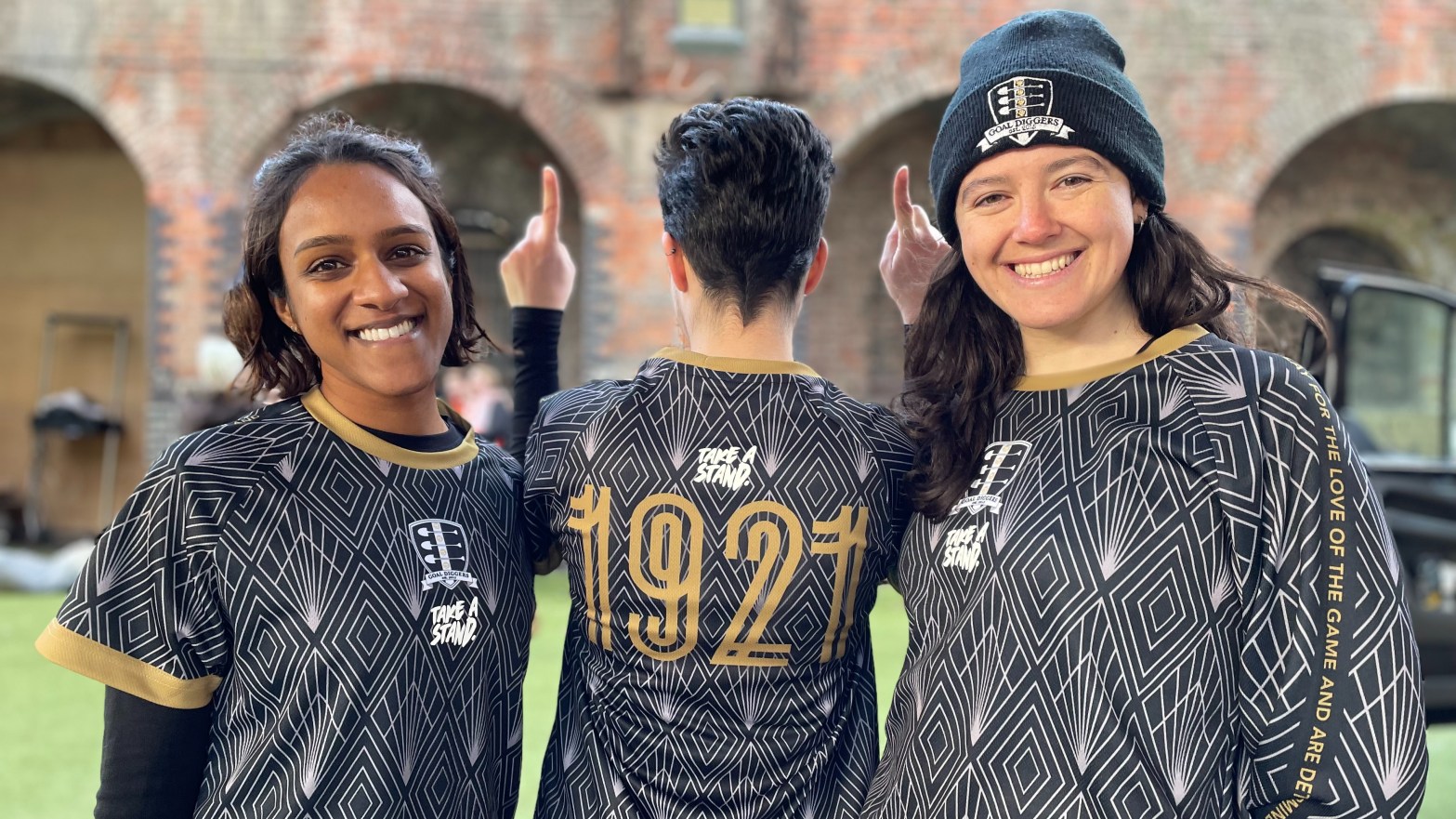
London FA is another client I work closely with, who utilised their staff members to champion International Women’s Day. Each staff member shared a quote captured through a graphic illustrating how they intend to #breakthebias around women’s football. This content gives London FA colleagues a profile which helps showcase how their role contributes to the bigger picture of football.

London FA empowering community initiatives

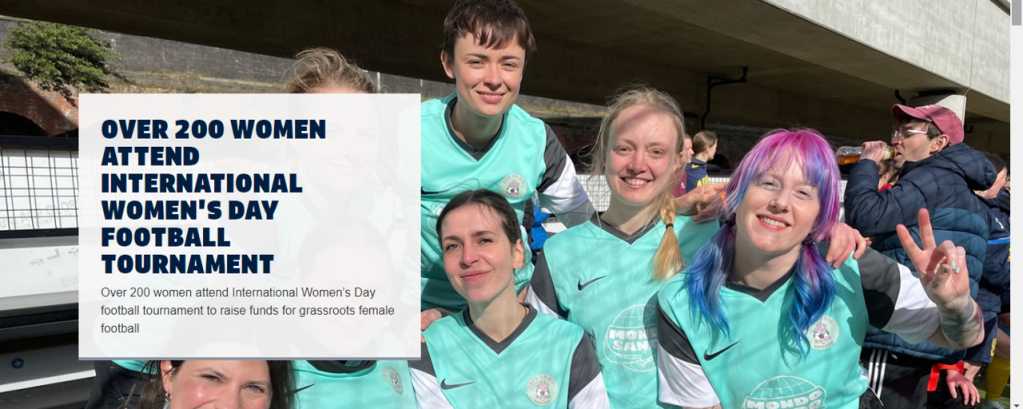
London FA also shared an inspirational story where over 200 women attended an International Women’s Day football tournament to raise funds for grassroots female players. As mentioned earlier with Lancashire FA, a key value for County FA’s on social media lies with representing their community, and through this initiative, London FA has championed this tremendously.


Suppose you have clients to support within an agency. In that case, it’s important to acknowledge national campaigns uniquely to promote the client’s personal values, which also furthers the work they’re doing across the community. Lancashire FA sharing two videos of female stories contributed to the communal side of International Women’s Day; promoting their County Women’s League was beneficial to introducing a new fixtures programme, and the competition was a natural maximisation opportunity for fan engagement. A similar applies to London FA getting their staff members to share how they’re planning to break the bias through their roles alongside the community initiative they’re each aware of.

Oporto Sports Series: What can we learn about how County FA’s have utilised the Women’s Euros 2022 to best promote their services?

Throughout the Women’s Euros this year, we’ve witnessed many brands, organisations, individuals, and non-sporting companies utilise the tournament’s enormous exposure to best promote their internal services. At Oporto Sports, I’ve pleasantly gained various insights surrounding how County FA’s have used the #WEUROS2022 to amplify multiple services, including playing & coaching opportunities, national campaigns supporting women’s football and more. Throughout my experience at Oporto, it felt only right to share how the County FA’s I’ve worked with have optimised promotion from the competition in ways other marketers and brands can learn about localising content to best tailor their values.

Content breakdown regarding London FA

London FA had produced a regular news article series on their website entitled Game Shapers, where they interview individuals who have helped to change the game of grassroots football. During the Women’s Euros, they decided to interview former England and West Ham defender Grace Fisk, who advocated for changes to encourage more female participation.

During the tournament, LFA recognised they wanted to boost their web traffic as much as their social media engagement. For this reason, it was a logical decision to adapt content streams they already had running to be tailored to the competition that best captures their audience’s awareness.

The interview with Grace covered an overview of her career and thoughts on the Women’s Euros alongside her future. The article then followed to promote ticket sales to the competition alongside promoting another campaign entitled #DiscoverMyTalent, where players can be referred through the Women’s Talent Pathway via England Football. 

Through this content piece, LFA has followed the three basic marketing steps to optimise impact. Step 1 is awareness generated via the content; step 2 is engagement produced via the interview, and step 3 consists of various calls to action.

As well as showcasing storytelling through their news articles, it’s clear that the Women’s Euros enhances an inclusive audience to the game; this was something LDN FA wanted to maximise. The event was entitled the UEFA Women’s 2022 Roadshow, which allowed attendees to meet game legends, take pictures with the trophy, and discover local artists through entertainment ventures.

Considering the tournament has been delivered in the UK, London maximised the opportunity to showcase this event in the city which would naturally draw a wide audience. Adding to that, they didn’t only use the occasion to promote the Women’s Euros but also to raise the profile of local artists and creatives. This was achieved through the reach of football which helps demonstrate the inclusion factor spreading beyond sport and empowering football’s relationship in other industries, such as music and entertainment.

England and Arsenal defender Lotte Wuben-Moy was utilised in this content piece by LDN FA to promote a short story about her growing up in London and setting up her own Primary school team. Following on, the caption then leads towards encouraging viewers to view playing opportunities taking place across London.

From this content, the fact it was generated from a quote tweet of a Lioness post enhances the audience reach of LDN FA’s brand, considering it stemmed from a verified account. This is the key point to learn from this content; occasionally, well-timed quote tweets work in a brand’s favour.

Content breakdown regarding Oxfordshire FA

Oxfordshire FA best promoted the Women’s Euros in their favour by creating a hashtag #GETINTOFOOTBALL to encourage more people to participate in the game. This hashtag being generated is a marketable asset to help localise their content to the appropriate audience. Using the Women’s Euros demonstrates their intention to adapt it to a national campaign to enhance brand awareness.

The lesson from this content piece is that when creating traction towards your audience and services, utilising national campaigns with synergetic values will only enhance the strength of your online community.

Throughout the Women’s Euros, OFA has a Youth Leadership Team responsible for promoting responsible and respectful behaviour across grassroots football in Oxfordshire. They decided to host a Weetabix Wildcats Centre football session, capture images from the opportunity, and share them across socials.

This opportunity gets more girls to play football, which is one of the core values of the Women’s Euros, and OFA has endorsed this value effectively from this post. Not every content piece needs to be super creative if the impact is obvious!

Following the above content piece, OFA decided to release a blog outlining the outcomes achieved from the session. Some of these included the number of girls of different ages participating in the festival, the atmosphere created during the session alongside an actionable link for the consumer to discover more Weetabix Wildcats sessions.

This is more than just about enhancing web traffic; it’s about OFA making an effort to better connect with their community to encourage more awareness from parents, coaches, clubs and more bodies involved in the game to encourage young people about the benefits of these initiatives. For this reason, more organisations representing grassroots football would benefit from similar impact-driven content.

Content breakdown regarding Lancashire FA

Lancashire FA shared some well-timed promotion for the Squad Girls campaign ahead of the Lionesses taking on Northern Ireland in the group stages. This campaign is one that many County FA’s are pushing forward throughout the tournament due to its focus on getting more girls to try out football; therefore, getting behind an important campaign that enhances inclusion is only right for promoting the right purpose.

Like London FA setting up the UEFA Women’s 2022 Roadshow, Lancashire FA created their own football festival, Fan Festival in Leigh, where they captured a freestyle footballer, John Farnworth, show off some tricks to the public.

Once again, this is a content stream which advocates for LFA promoting the community spirit they want to game to amplify.

IMPACT, IMPACT, IMPACT! LFA produced an impact poster demonstrating the outcomes across the county relating to community goals they aspired to fulfil, interlinked with the Women’s Euros.

Not only does this showcase the work they’ve done with their community, but it also gives LFA the chance to build better connections with clubs that function across Lancashire, proving their ability to support the growth of grassroots football.

Despite insightful posts around facts and figures not being the most popular to draw attention from casual audiences, there are different audiences it will resonate most strongly with, and that’s something LFA have considered well with this tweet.


Considering how each of these County FA’s has utilised their content throughout the Women’s Euros, there are plenty of lessons brands, athletes, and others can benefit from relating to cultural sensitivity, well-timed content production, outcome-driven focuses and more.

What was the most insightful piece of content you learned from?

#WEUROS2022 Weekly Round-Up: What content stood out this week and why?

UEFA Women’s Euro utilising their Tweet composer

A couple of days before the tournament began, the UEFA Women’s Euros account on Twitter effectively utilised Twitter’s Tweet composer to give an introduction to each team. This content is effective because it optimises short-form storytelling alongside enhancing web traffic by providing each group with a visual introduction alongside a web link which users can branch off to find other content about other elements of the Euros.

What can other brands learn from this?

Ultimately, using platform-specific features should be considered to maximise impact through content. For example, this content piece encourages viewer awareness, which increases the likelihood of them following on to click through to discover further information around the content theme.  

Nationwide’s Geography Challenge: #WhereGreatnessIsMade

The Lionesses have rolled out a #WhereGreatnessIsMade content series. One video that stuck out to me involved where two players, Lotte Wuben-Moy and Keira Walsh, took on Nationwide’s Geography challenge where they were asked location-related questions and had to place markers on where they thought they were.

UK bank, Nationwide, promoted their Mutual Respect Grants Fund where the intention is to promote respect on and off the pitch. The video with the players was initially used to create awareness of where greatness has been made.

What can other brands learn from this?

Although this content was treated as a sponsorship collaboration, it can inspire other content ideas for different brands and companies for various purposes, including primary schools integrating similar activities to utilise throughout lessons to enhance engagement with their pupils through teaching.

It can inspire other organisations to think along similar lines, for example, County FA’s promoting playing/coaching opportunities which are now amplified by players that grew up in their Counties. Such as what London FA did here through Lotte Wuben-Moy before she tested positive for COVID. 

Barclays Women’s Super League: #WEUROS2022 Animations

It’s no surprise to see the Barclays WSL get involved in amplifying the tournament. A day before the tournament commenced, the content drew together some eye-catching comic-themed visuals illustrating each group within the campaign.

During the opening week, this was one of their highest media tweets, demonstrating the league followers’ appeal towards animated marketing content to capture content.

What can other brands learn from this?

At pivotal moments throughout the tournament, there could be a chance for brands to create an animation series through videos or comic carousel-themed visuals to illustrate the story of individual teams to draw engagement from the #WEUROS2022 audience. Like how BT Sport presented an engaging animation piece ahead of UFC Hall Of Fame athlete Khabib Nurmagomedov’s last fight in his career.

A reinvention of the Lionesses jersey through embroidery

Diana Al Shammari, also known as The Football Gal, has published on Instagram a design she’s created where she’s embroidered the Lionesses jersey through her artistic talents. Diana also has a website where she sells her embroidery-inspired designs for both men and women.

On Instagram and Twitter, the video is one of her most viewed clips compared to the remainder of her media library and understandably so, considering consumers’ appetite for unique fashion across social media.

What can other brands learn from this?

Upcoming fashion brands can utilise some of their items to be inspired through the Women’s Euros to drive traffic to their websites further and build connections with football-related audiences. Plus, the cultural relationship between football and fashion hasn’t been stronger, considering the number of elite football players collaborating with high-end fashion brands.

Amelia Dimoldenberg takes the Lionesses on a Chicken Shop Date

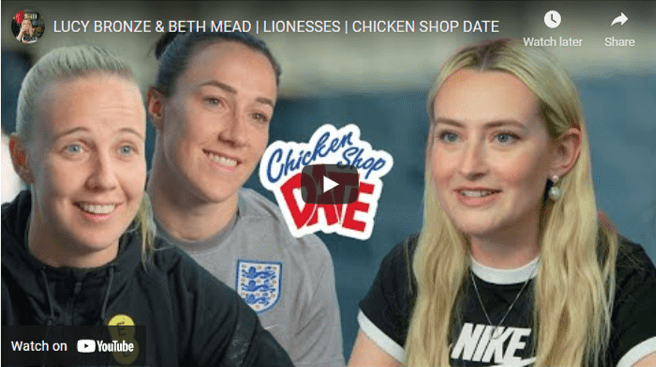
Lioness stars Lucy Bronze and Beth Mead featured on content creator Amelia Dimoldenberg’s chicken shop date series, which revolves around expressing the personalities of Amelia’s guests away from what they’re commonly known for.

Amelia has previously featured other football stars on her YouTube series, including Tammy Abraham, Bernardo Silva, and Jesse Lingard. Therefore, she’s built a strong profile already within the football industry to expand her brand to new audiences.

The Women’s Euros thus far has been a huge marketing spectacle, particularly with the Nike campaign, content collaborations and England’s win against Austria setting an attendance record in the competition’s history of 68,871.

What can other brands learn from this?

This initiative gives the Lionesses the chance to build their personal brands over to casual audiences to the game through a non-sporting personality, which can enhance their marketability moving forward after the tournament.

Ultimately, this demonstrates the key behind athlete-driven marketing is expressing the personality perspective to build better connections with your audience and, more importantly, new audiences. For example, it’s what the UFC has begun capitalising on through their content creation strategy, such as having a series where no MMA questions are allowed to be asked to their athletes.


And that’s a wrap! What piece of content stood out for you?

Lesson 4 about the Metaverse: the current state of NFT’s, potential behind new technological paradigms, the influence of gaming and more

Throughout this blog series, you’ve discovered the influence of storytelling and utilities on NFTs. Plus, the impact which blockchains have across the digital world alongside new marketplaces. Throughout this blog, you’ll discover ways NFTs can open networks, further details about the effects of tokens, the internet’s influence across native brands, the role games play and more.

The current state of NFTs

The fact that profile picture collections are on the rise is a strategy to present to your audience that you’re in a community which can open new networks for you.

The influence tokens have on NFTs

To understand the potential that NFTs can have on applications, the two headlined tokens must be clarified.

For example, hearing a car is an open pickup, it’s expected to have an empty truck and 4×4 traction. This thought process can be applied to smart contracts.

When a smart contract is an ERC721, it’s predicted to mint tokens for them to have unique characteristics. If you hear it’s ERC20, it should first approve transfers between users and manage spending allowances.

ERC721 are Non-Fungible Tokens, whereas ERC20 are fungible non-unique tokens.

ERC721: they’ve got different properties and values from one another. E.g. Bored Apes, despite being from the same collection, each has an additional value.

ERC20: these have the same values and properties.

With ERC271, you can do the following:

  • Restrict access to a resource
  • Generate assets/content from token attributes
  • Use ownership to gain a token

With ERC20, the following can be achieved:

  • Proprietary currencies
  • Blockchain verified scoring systems
  • Rewards based on a token account

To make this point clear, here’s a Sandbox example.

Sandbox sells virtual lands and other assets with its own currency, SAND.

An NFT is spotted on the orange box, which is placed at LAND (-134, -70).

SAND is the native currency of the Sandbox. Since it’s a fungible token, 1 SAND = 1 SAND. To recap:

– The Lands are ERC-721 tokens, therefore, NFTs. They have different properties, and each has a different value.

– SAND is an ERC-20 token that works like the native currency for that virtual world. All SANDs are equal in value.

NFTs- Native Brands

Each new technological paradigm opens an opportunity to birth a new brand.

For example, in the 90s, the internet purchased brands like Amazon, Google and Salesforce, whereas mobile bought Uber, Air BnB, Instagram, Tinder etc.

Games

Games can play a key role in NFTs achieving mass adoption.

For example, a rare Fortnite skin can cost $150. This can help players communicate their personalities, differentiation, belonging etc.

Games like World of Warcraft and Counter-Strike, for example, have a kind of undercover market where users sell items to each other.

Imagine the potential to combine in-game cosmetic items with NFTs?

Some of the biggest game companies in the world, like Ubisoft and Square Enix, have already started experimenting or discussing how to insert NFTs into games. This was accompanied by criticism from most players, which can be considered normal since there is still a lot to learn about NFTs.

Fundraising

NFTs can help creators to raise money for projects.

It already happens. For example, a collection like Cool Cats has launched games and new readers in its roadmap. This was only possible because thousands of people bet on the project and decided to finance it.

Here, the creators’ creativity will drive the market. Here are two examples:

Online Writing

Even a blog post can be converted into an NFT.

That’s the idea behind Mirror (https://mirror.xyz/), an online writing and publishing platform natively integrated with NFTs.

The writing tool itself is simple and intuitive. The potential revolution is under the surface.

Every time a post is published on Mirror, it gets added to the Ethereum blockchain, creating an immutable record of who published that post, when it was published, and so on.

While writing great articles, authors can fundraise for their projects and sell articles as NFTs, all directly through the platform and fully integrated.

Hint: Mirror has become a platform for many other things besides Online Writing. It will be interesting to follow its next steps.

Music

Just like games, music will be greatly impacted by NFTs. It is not yet known how, but we can say with certainty that NFTs will change the way artists build relationships with their audiences. Today, many rely on signing to record labels or receiving pennies when their music is streamed.

Today, there are already marketplaces for NFTs focused on music and several other platforms that seek to tokenise these files.

Musician Daniel Allan, for example, created a crowdfunding campaign using Mirror to raise funds for his ” Overstimulated ” project. He presented something close to 50 ether (See the current price of 1 Ether here and do the math…).


To summarise, it’s evident that profile pictures are becoming collectables within the NFT landscape. Tokens have made a revolutionary impact on NFTs; the gaming industry has presented as a unique market to offer diverse values for brands, and blogs can effectively be utilised as NFTs alongside music.

As with each blog, here’s a link to discover the full details around the metaverse through an Inevitable course.

Lesson 3 about the metaverse: Wallets, marketplaces, big projects, virtual worlds and more

Thus far, you’ve been educated about various elements involved in the metaverse. This week, you’ll discover the most fundamental wallets and marketplaces in the NFT ecosystem, projects with their marketplaces, and how some brands have evolved their virtual worlds.

Wallets

There are many key wallets across the NFT ecosystem, which involve the following

  • MetaMask: it operates on browsers and mobile apps. It was created to interact with reorganised applications built on Ethereum’s blockchain.
  • Dapper: Specially developed to interact with the blockchain created by Dapper Labs, Flow.
  • Rainbow: A mobile-orientated wallet designed to interact with Ethereum applications and with a visual way to show your NFTs.
  • Phantom: A wallet designed specifically for the Solana blockchain. Like MetaMask, it works as an extension for browsers.

Marketplaces

Opensea: it’s the globe’s largest NFT marketplace. Opensea keeps 2.5% of all transactions made within the platform.

Coinbase NFT marketplace: you’ve got options to gain followers and follow others.

Rarible: An instinctive marketplace with its own token ($RARI) for users to help with platform governance.

VeVe: it launches digital collectables from famous brands like Spiderman, Jurrasic Park and Disney.

Foundation: An Ethereum-based marketplace focused on more premium arts.

FTX NFTs Marketplace: one of the largest crypto marketplaces in the US. 5% per transaction is charged, and it supports NFTs from blockchains Solana and Ethereum.

Nifty Giveaway: this is a marketplace found on curated pieces.

Big projects

Some projects have created their marketplaces, including the below.

Users can collect NBA moments and exchange them with other users.

Users can collect creatures with different features and then compete against each other alongside selling them.

This fantasy football game allows players to buy, sell, trade, and manage a virtual team.

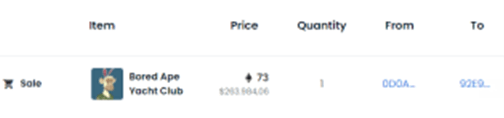
This consists of 10,000 avatars and is now a symbol of the crypto community. Being placed on marketplaces brings visibility and greater liquidity potential to the project.

Virtual Worlds

As Facebook has changed its name to Meta, the metaverse began making more headlines meaning they generate more money.

The above graphic represents a virtual world where players can build virtual experiences. The company sells land from this world to other creators and brands.

Below is a map of the game, notice how some brands can own some land.

To summarise, the most popular wallets across the NFT ecosystem appear to share similar themes, involving being built on mobile apps and popular blockchains. The most lucrative marketplaces seem to own their tokens and launch digital collectables for well-known brands. Regarding notable projects, they tend to focus around allowing their users to feel a sense of ownership over their digital assets and experiences; a similar applies to the virtual world.

To learn more about the full benefits of the metaverse, click here.

Lesson 2 about the metaverse: diverse content creation, blockchain, cryptocurrency and more

Thus far, you’ve been educated around elements of storytelling and utilities alongside how NFTs are instrumental components across the metaverse. This week, the focus emphasises a term called ‘hash’, which refers to diversifying content creation, and blockchains impact across the NFT industry alongside the most important types of cryptocurrency.

Diverse content creation

There’s a function called ‘hash’. This refers to generating a sequence of numbers and letters based on a message you may be typing to someone. For example, if you’re intrigued about two Harry Potter editions containing the same content, there’s an opportunity you can hash each book’s content to identify if they’re the same.

Blockchain

Blockchains are a significant record of transactions which require grouping in blocks, hence why they’re called ‘blockchains’. It’s seen as a revolutionary technology which many sports brands have utilised to expand their monetisation streams, such as some sports clubs offering fan tokens to their supporters.

Going into further detail, the most important features of global blockchains consist of

  • Them being decentralised means not relying on centralised entities to operate, for example, an Amazon server/government. Instead, the more effective blockchains rely on behind-the-scenes computation provided by independent nodes.
  • They’re fully public and auditable: People need to be able to access blockchain history. For example, the open-source blockchain Ethereum’s history is accessible via this link https://etherscan.io. When referring to ‘history’, it relates to the following key details: the address, transaction amount and the method involved in forming the contract.
  • They’re practically incorruptible: If someone attempted to register a fraudulent transaction, they wouldn’t end up with a different block hash compared to the remainder of the network. Therefore, that chain of fraudulent blocks would need to be enforced with more computation power than the network remainder, a virtually impossible task.

Cryptocurrency

Many would argue that globally, Bitcoin has proven the most important cryptocurrency thus far. In some countries, crypto has been revolutionary, such as Nigeria, Venezuela, and Argentina; crypto has proven to separate the impact of arbitrary policy decisions on the currency, which has proven risky for the general population.

Networks

Each coin can operate on different networks, created for different purposes.

Address

In the metaverse, an address is the first point of contact we all identify as.

Below is an NFT-related example

Despite the address potentially being complicated to remember, the current ecosystem is attempting new ways to make remembering this user-friendly. For example, using these in-interest domain names could be a way forward as instead of ‘mcdonalds.com’, you can use ‘mcdonalds.eth’.

Budweiser has bought the beer.eth domain and have published online.

Gas fees

When a transaction is operated, network users pay for them.

The fee goes to blockchain miners, so their service continues to run efficiently.

Ethereum is the most popular blockchain in the NFT landscape.

Layers

The blockchain ecosystem can be divided into two layers.

Layer 1: this is the blockchain itself. Examples involve Ethereum, Bitcoin, Solana, and Flow.

Layer 2 refers to a network or technology operating on top of a current blockchain to improve its scalability and efficiency.

This type of technology has supported many people in entering the world.

Smart contract

These are programs stored on a blockchain running an auditable logic that anyone can interact with.

Ethereum is an open smart contracts program allowing thousands of ‘innovators’ to begin using the technology, not needing to set up their own blockchains.

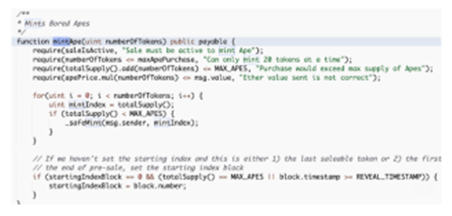
Every NFT collection is based on a smart contract. In the case of Bored Apes, for example, their Smart Contract minting function says:

  • Check if the sale is active
  • Check if the number of requested apes is within the allowed amount
  • Check if there is enough supply for the requested amount
  • Check if the user sent enough ETH
  • Mint each sold ape

Token

These represent ‘tradeable things’ that are on a blockchain.

Remember, NFTs are non-fungible tokens. Therefore, they won’t have the same value.

For example, certain types of bored apes will be worth more than others.


To summarise, the ‘hash’ function allows diverse content creation to become more lucrative. Blockchains have proven a significant game-changer across the NFT landscape due to their ability to offer new monetisation streams; a similar applies to cryptocurrencies.

To discover the full details around the growth of the metaverse, feel free to study Inevitable’s course here.