The AST Wrap-up: esports, the winter games and the future of sports marketing

It’s Sunday, and you know what that means, it’s time for the AST Wrap-up! This week sees AC Milan push boundaries with esports. Vancouver set their sights on the 2030 winter games, promoting social change reflects well on brand growth, EA Sports continue their efforts with MMA & ice hockey and France finally agrees to bring MMA to its people.

AC Milan look to make their mark in esports
History has been made with the Italian giants as they establish a calculated partnership with gaming firm Qlash. This joint-venture will form a new esports team that will compete across the football and gaming world. AC Milan’s esports team consists of FIFA eplayers’ Diego Campagnani and Fabio Denuzzo where they’ll compete in the FIFA Global Series, FIFA 21 competitions and the FIFA Club World Cup.

The Red and Blacks will also participate in the Brawl Stars mobile game World finals on the 21st and 22nd November; the game has over 1 million daily active users.

COVID19 has taught football clubs a valuable lesson that you can’t solely rely on match-day content to fuel your digital marketing strategy. Esports has been an innovative opportunity to engage global club audiences with content across a unique space dominated with Gen Z demographics. This is forecasted to be an efficient partnership not only for fan engagement but for optimising commercial sponsorship opportunities as this pushes the Milan brand into a rapidly growing sector.

Vancouver aims to utilise the 2030 Winter Games to recharge their economy

Vancouver City Council has strong ambitions to host the 2030 Winter Games, which if successful, will have a tremendous impact on its economy to recover from COVID19. The Canadian City once hosted the games in 2010 and from a financial standpoint, it could prove a practical choice to bring the games to Vancouver considering its low-cost infrastructure.

The 2010 Winter Games yielded C$1.05bn in a gross domestic product, 20,000 new jobs and between C$70.2m and C$91.9m in federal tax revenue. Councillor Melissa De Genova proposes seeking provincial and federal governments for funding and establishing partnerships to finance the games if it comes to home soil.

If Vancouver lands the 2030 games, it could be the first nation to apply the same ‘footprint’ for two editions of the global tournament. The 2010 games cost C$4bn to operate; however, this could rise to C$7.7bn if the City follows through with their projected rail line to the airport and convention centre.   

Promoting social change will shape the future of sports marketing

2020 has seen Marcus Rashford, Megan Rapinoe, Naomi Osaka and Lewis Hamilton as some of sports most influential stars standing against social injustice. Marcus Rashford has won the people’s hearts with his extraordinary free school meals campaign not only resulting in a life-changing impact nationwide but a 65% Twitter follower growth.

World-class tennis star Naomi Osaka advocated against racist police attacks by wearing a face mask entitling the names of black Americans victimised by police brutality in the US Open final. This saw her following online pounce by 57%.

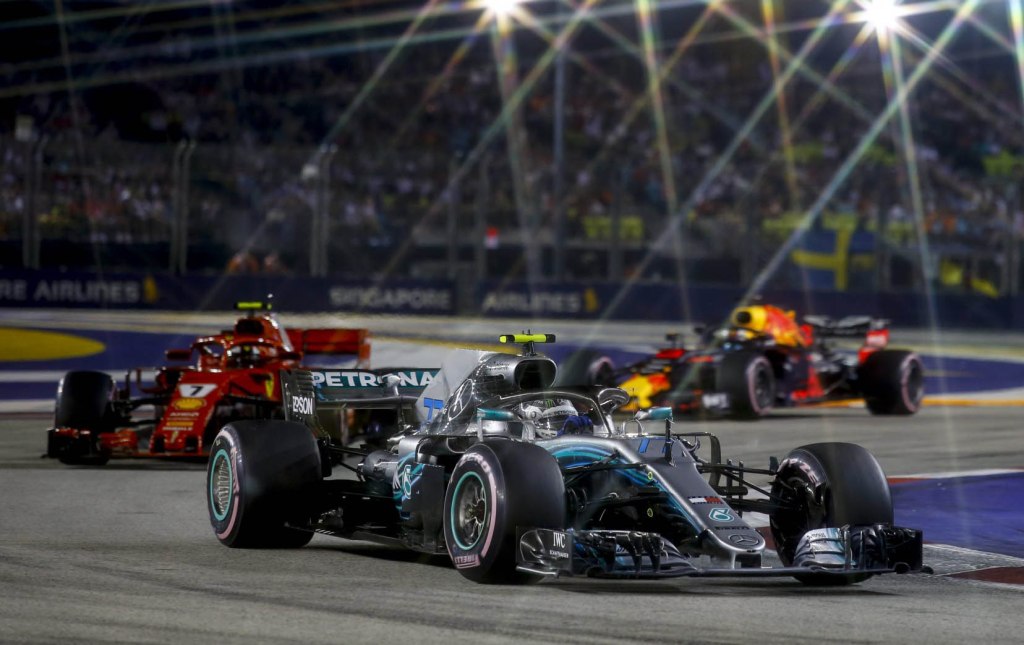
Formula One superstar Lewis Hamilton has actively utilised his following to support the Black Lives Matter Movement. His Instagram following grew by 44% while his general engagement rate per post doubled on the official Formula One social media accounts.

Analytics firm Nielson has identified this trend is primarily driven by young people obtaining an interest in socially responsible brands. Therefore, from the activism presented from athletes; brands and sponsors now have an opportunity to explore a new avenue to drive further engagement through this social upheaval.

EA Sports extends its involvement with the NHL and The UFC

The video game giants have confirmed a multi-year partnership with two of the worlds hottest sports franchises, meaning stimulation games will be continued to develop under EA Sport’s leadership.

The NHL and EA have pursued a three-decade working relationship thus far. The two continue to innovate the ice hockey gaming experience through new and engaging features. EA’s connection with the UFC will run until 2030; their joint focus is towards boosting the link UFC gamers feel when playing the game through improved design, visualisation and revolutionised activations.

These joint ventures allow both the NHL and the UFC to push boundaries to present world-class entertainment to both of their globally engaged audiences through the power of gaming.  

MMA rights are now up for grabs in France

French media regulator, the Conseil supérieur de l’audiovisuel (CSA) has given the green light for the nation’s broadcasters to present MMA across their networks. The CSA had banned MMA coverage in France since December 2005, until the country saw it’s first MMA fight last month.

The CSA has now issued their guidelines from an open consultation they had following the legislation of MMA in France. These broadly include showing MMA action after 10:30pm on free-to-air channels; premium services can broadcast footage after 8:30pm and broadcasters are encouraged to provide full exposure of women’s practice.

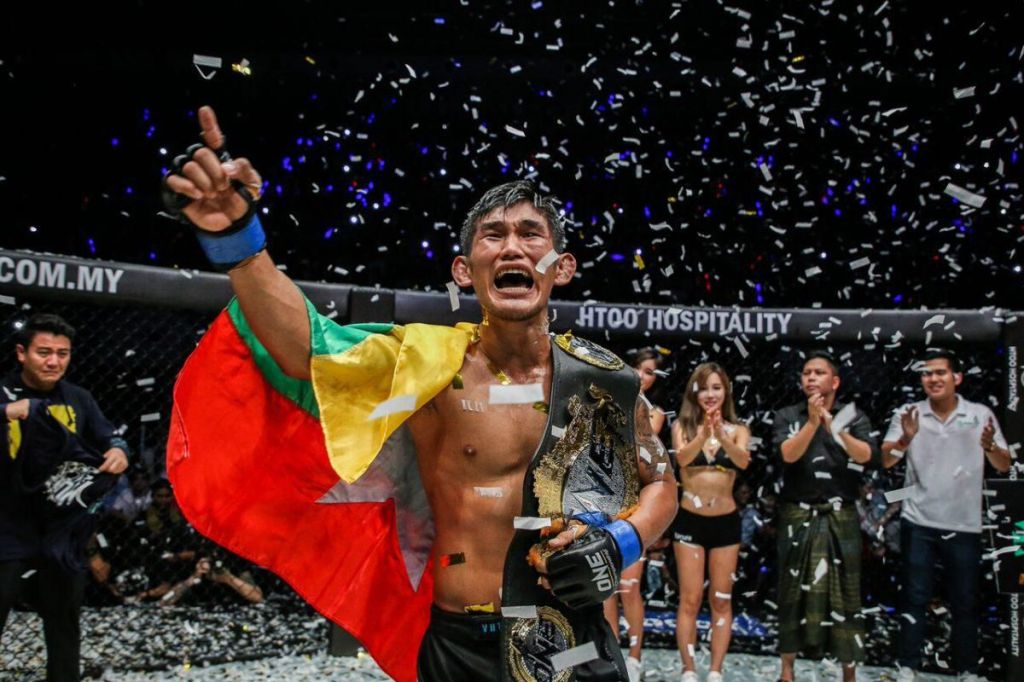
MMA is one of the most rapidly growing sports overseas. The UFC has aggressively spouted an international profile. ONE Championship has put Asia’s hottest fighting prospects on the map. The Professional Fighters League are maximising fan engagement in the combat sports game, and it will be fascinating to see if MMA in France prospers similarly under this agreement.


And that’s a wrap! What impact will AC Milan’s esports venture have on their commercial revenue? Will Vancouver be the right move for the 2030 winter games? Will we start to see a change with sports brands not being hesitant to utilise their digital presence the same way athletes are? How will the gaming experience for NHL and UFC fans change under EA Sport’s leadership? And, how powerful is the latest rights agreement for French MMA’s profile?

What can football clubs do to turbocharge their content strategy?

Football clubs are some of the most lucrative business properties in the world, particularly when it comes to their influence across the digital landscape. Football clubs make up approximately 66% of the top 30 most internationally followed sports clubs.  You would think this dominance in the digitalised era comes down to football clubs being ahead of the curve regarding their comprehensive knowledge of their audience, high valued marketing and keeping up with the latest trends. However, this isn’t always the case. Despite the enormous outreach clubs have across social media (SM), it’s not being optimised. This blog will focus on what football clubs can do to maximise impact from their content strategy.

Typically, player transfers, team line-ups, in-game updates, pre & post-match reactions are critical components of a football clubs content strategy. COVID19 threw a spanner in the works due to the significant lack of matchday content to create. Majority of clubs reverted to posting previous club achievements, at-home training regimes, archived matchday footage and raising awareness about the virus.  

It didn’t take long until clubs jumped onto the Chinese video-sharing app, TikTok. The app has become the fastest growing global SM platform in the last 18 months, with over 500 million active users. The app is highly dominated by Gen Z audiences, with 41% of users being 16-24 years old. Spurs, Manchester United, Liverpool, Inter Milan and Bayern Munich are some of the clubs that are scoring big numbers on the medium. Most content consists of skill, goal and celebration compilations that are synchronised with viral app sounds and challenges. In July 2020, 13 football clubs made the top 20 TikTok list of most engaged sports teams. FC Barcelona was 1st with 420m+ interactions. They produced the notable ‘FC Barcelona challenge’ which encouraged their audience to put a blue top on top of a red one, which coordinated the colours of the club kit.

The critical theme football clubs rely on in their content strategy is matchday footage. Despite the high levels of reach, engagement and traction these clubs receive, they’re not necessarily offering any other value to their fanbases aside from continually reflecting on previous events. Do you think this suggests football clubs know their audience?

FILE – In this Saturday, July 4, 2020 file photo, empty stands are seen as Manchester United’s Paul Pogba (6) shoots a free kick during their English Premier League soccer match against Bournemouth at Old Trafford stadium in Manchester, England. Much to the Premier League’s dismay, the new season will start on Saturday, Sept. 12 just as the last one finished only 48 days earlier — in empty stadiums. The world’s richest football league on Friday intensified its lobbying of the government to allow supporters back into games, even as England grapples with a sharp spike in coronavirus cases. (AP Photo/Dave Thompson, file)

Clubs are relying on matchday content because it’s what they anticipate is the highest source of engagement. Although, according to Goran Milosevic, only 3% of Real Madrid’s fans live in Spain which indicates 97% of Madrid’s fanbase may not appreciate mass amounts of content they can’t access in person. As COVID19 has significantly numbed the feeling of attending matchdays, football clubs need to think beyond the pitch to entice their global consumers.

Plus, despite the millions of followers that clubs have across SM, those supporters are virtually ‘anonymous fans’. Club’s don’t hold a thorough understanding of their fans behaviours, emotions and interests considering their content strategy have longly remained the same.

MOSAIC profile: image obtained from: https://bit.ly/2U22fFy

So, what’s the solution for football clubs to turbocharge their content strategy? Firstly, they must build a comprehensive understanding of their fans. This can be accomplished by owning fan shared data to build a robust psychological profile of each demographic to create a more robust marketing approach.

Being a fan of the beautiful game, I’ve realised than sports consumers are interested in more than the final product. If matchday content remains as the catalyst of a club’s digital strategy, they should place more emphasis on the events that produce that ‘final picture’. This can include higher volumes of pre-game footage during game week and post-match reactions.

Ensuring your fans feel appreciated is the number one priority to sustain your audience long-term. This can involve clubs player meet and greets happening more frequently (once safe to do so!), recognising fans during live matchdays and creating more interactive challenges away from the pitch.


To conclude, football clubs can turbocharge their content strategy by putting their fans at the heart of their initiatives through accessing robust data sets, thinking outside the pitch and ensuring they produce appreciative content to their audience.

Ash’s exclusive interview with Júlia Pimenta Salazar, Teams and Programmes Manager at Street Child United

This weeks interview found me chatting with Júlia Pimenta Salazar from Street Child United. Júlia is a professional in sport for development where her passions lie with using sport as a tool involved with making a life-changing impact across deprived communities. Throughout this blog, Júlia speaks on where her passion began, the value of branching out your skill sets and the essential lessons to becoming a successful team manager in the sports industry.

Q1) Julia, it’s an honour to have you on Ash’s Sports Talk. Could you kick this off by sharing how your sports career began?

Thanks for the kind introduction, Ash. I am delighted to be part of your blog.

I have always been passionate about football. When I was a child, I had the dream to become a footballer, and it was going well (I played two youth World Cups for Brazil) until I suffered an injury that kept me out of the field, at least as a player. I got so disappointed and frustrated that I decided to study something else and tried Law. However, I realised soon enough that I would never be fulfilled if I wasn’t connected with sport. Therefore, I decided to study Physical Education, and I quite liked it, I was very driven in the course, participating in several study groups in distinct areas. At the university, I was very interested in neurophysiology, and my first research project was ’Analysis of brain structures in football players under seventeen years old’. It aimed to compare the brain of footballers from different tactical positions and understand what the impact the training sessions were having on brain’s modulation and also if there was a neuro profile according to the tactical situation. Although I still like the topic, during the course, I got captured by something else, sport management.

Still, in my undergraduate studies, I was awarded a scholarship by the Brazilian Government under the ‘’Science without Borders’’ programme that provided me with the opportunity to study Sports Science abroad for one year at Dublin City University (DCU). I was delighted by studying and learning sport management that I decided to do that for a living. Therefore, I applied for my first Master’s at Universidade de Sao Paulo (Brazil) in Sport Management (which I finished last year). However, I concluded that although I had acquired knowledge of the Brazilian and South American sports market, I still had a lot to learn about the international one. Because I could not afford a Master’s in the UK, I applied for the Chevening scholarship, a British programme that aims to develop future leaders and people of influence. I faced more than 65,000 candidates, and I successfully had the opportunity to do my second Master’s in Sport Business and Innovation at Loughborough University.

Q2) I appreciate you’ve had a variety of experiences in sport, from marketing, market research and programme management. What impact have these diverse experience brought upon your skill-set to help you stand out in the sports industry?

As I mentioned above, while in university, I had the habit of participating in different study groups, and that’s because my interests were continually changing. Once I got a certain level of knowledge in a specific subject, I started to get bored and feel curious about another one. Studying different topics and also experiencing various universities and distinct countries helped me a lot to have a big picture of the area.

Furthermore, I recognise myself as a multipotentialite. I am the person who knows a bit about various areas and somehow what I always thought this was a weakness (lack of focus) became my main strength as I can circulate well and jump into conversations about different themes.

Q3) Your work at Street Child United looks inspiring. Could you share more about what the organisation represent, your role within the project and what part you play in the bigger picture?

Street Child United (SCU) is a UK charity that uses the power of sport, specifically international sports events, to change the negative perceptions and treatment of street-connected children everywhere. Our HQ is in London, but we act globally. As a Team Manager, I coordinate the relationship with global and local NGOs and manage our legacy programme, monitoring and evaluating the impact our partners and we create. I also provide support for governance issues and advocacy strategies. Moreover, one of my main tasks at SCU is the coordination of our alumni programme, which consists of investing in the personal and professional development of our former participants. Therefore, the young people who wish to keep campaigning for the rights of the street-connected children and speak on their behalf can keep connected and supported by us.

Q4) Street Child United does some excellent work to provide as many equal opportunities as possible for deprived communities. From your experience, what further support do you believe similar organisation like Street Child United could benefit from to optimise impact through sport?

Sports won’t necessarily cause an impact. It is not a relationship of cause and consequence; there is a lot of work around it to use sport as a vehicle for change. To optimise the impact, firstly is essential to understand the purpose behind it (why you are doing what you are doing) and for who you are delivering a project or a programme. The leadership and directions should always come from the community you are supporting; they know better what they need, as well as their assets, resources and demands. Therefore, to optimise impact thought sport, it is necessary to comprehend the environment and what is your role there.

Q5) While you’ve been the Team and Programmes Manager for just over two years at Street Child United, what essential lessons have you learnt about being an effective manager in a sports industry setup?

One of the most important lessons that I got so far came from my boss, a very inspiring person who is the CEO and co-founder of the organisation. For him, nothing is impossible, and many times in these two years at SCU while undertaking different challenges, I thought that we wouldn’t make it, or we wouldn’t be able to deliver something. But we always do. Sometimes it takes a bit longer, maybe not exactly how we planned, but other times, even better than we previously thought. I learnt from him that you have to believe in what you are doing and cease the possibilities before giving up on anything.

He also taught me to be bold. Sometimes I come up with logical, structured and safe plans and when presenting it, I feel it doesn’t reach him properly, and that’s usually because we could deliver something more audacious or with a higher impact. Thus, we do team meetings to get everyone’s input, and for many times I had to start from scratch again, combining the best of everyone. Therefore, I guess, there are three main lessons and it can sound very cliché, but it is real: Be bold, trust your team and don’t be lazy if you need to star everything again.

Q6) In your current role and from previous sports industry experiences, what have been some of the most significant challenges you’ve faced? And, how have these adversities moulded your character to become a more resilient individual to thrive in competitive environments?

One of my core tasks is to take the teams to the events (places hosting World Cups, for example). The projects we work with (that becomes the teams) deal with street-connected young people, and many children with this background don’t have passports either birth certificates. Therefore, taking the teams to the host country and securing all documentation needed on time is a considerable challenge. That’s a combined effort from our organisations, projects, lawyers, sponsors and other key players.

However, this type of challenge is nothing compared to the challenge that the people we work with have or had. I am not sure how it has moulded my character but working in the development sector makes you see things differently, especially working with vulnerable young people. You learn so much from them. Some young people have the toughest stories, faced extremely challenging situations, and still, they have so much love to give, and they do it, freely. Listening to what they have to say encourages me to keep fighting for what I believe and inspires me to be more resilient with my own adversities.

Q7) Julia, reflecting from this discussion and your sports career, what would be your killer piece of advice for someone wanting to pursue a career in sport?

Despite the essential lessons I wrote above, I would say that you can never miss an opportunity. I am where I am now (and still very far from what want to be) because I took all the changes I had so far. You don’t need to know exactly where your destination is, we will all get there eventually, but in order to get somewhere, you need to take the winds. Even if it will take a lot from you or you don’t see the immediate outcome, it is important to keep an eye open for the opportunities. So, my recommendation would be, talk to people, attend events, share your ideas, keep moving, things may move around accordantly.


Now that’s what I call a powerful interview! The work Júlia is doing is absolutely amazing and so important to showcase the power of sport. The more support the sports industry can provide towards organisations like Street Child United, we will begin to see more and more new leaders from deprived communities shine under the leadership and guidance of people like Júlia. A key lesson I’ve learnt from her is how she recognised that her strength was the passion for trying various trades in sport. Despite the importance of establishing your niche and owning it, testing the waters and dipping your hand into different roles and responsibilities can also serve you very well for your sports industry dream.

The AST Wrap-up: digitalisation keeps sport ahead of the curve

There’s never a dull moment in the world of sports business. DAZN move one step closer to becoming ‘The Netflix of Sports’, the sky is the limit for fan engagement, The NBA stays innovative via mobile gaming, AC Milan explores new opportunities with Apple Music, and Saudi Arabia remains a major player for global sports events.

DAZN expand international outreach

Global streaming service DAZN announces its Over-The-Top platform will be expanding in 200 territories in December. The service will host back-to-back boxing events for £1.99 on the first weekend of December. 

The UK-based company ironically haven’t launched in home territory just yet. However, their expansion is set to captivate audience engagement across North America and Europe. Their efforts have predominantly been based on revolutionising consumption methods for combat sport, which has seen them build partnerships with Matchroom Boxing USA, Golden Boy Promotions and GGG Promotions. 

UK Sports fans have been crying out for DAZN to launch on home soil, for the combat sports world, it will be interesting to see the impact this will make on PPV numbers in boxing and MMA. 

Fan engagement for sports media firms reaches new levels

Sports solutions and data firm, Sportrader, launches a new live data intelligence for sports media firms to optimise fan engagement. The features consist of real-time stats on athlete milestones, in-game insights and game betting splits. 

The impact is groundbreaking with the ability to alert a consumer when a player is about to break a record which will entice them to tune into multiple media channels. 

The initiative aims to follow the’ personalised’ approach for mass-sports fans by targeting them with live-data to engage them in a new era of technological activations. 

The NBA hone their efforts towards mobile gaming 

The National Basketball Association (NBA) have joined forces with Korean games developer Netmarble to establish a new mobile game to attract audiences across the Western region. The NBA players Union and the Kung Fu Factory are also involved in this scheme.

The NBA find themselves in good hands with Netmarble as they played a notable role in working with brands such as Marvel future fight and Lineage 2: Revolution. There’s no official title for the NBA’s mobile game just yet.  

The top basketball tournament is choosing the right time to exploit the mobile gaming market, considering its growth during the pandemic. Mobile game downloads are forecasted to increase by 35.7% year-on-year at the end of 2020. 

AC Milan personalise their fan experience through Apple Music

Italian giants AC Milan have recently signed up to music platform Apple Music to bring Milan fans two exclusive music playlists to optimise fan engagement. The two playlists are inspired by the players and are accessible through the club’s social media channels which focus on match days and the Women’s team. 

The joint-venture intends to provide fans with a personalised insight of players pre and post-match routines during different phases of the game, from songs that get the players pumped and ready pre-match to tracks which are played during post-match events. 

Milan has also recently partnered with Google to boost their fan engagement strategy. AC Milan is making every attempt to stay ahead of the digital sports curve by utilising technological activations to keep their fans engaged off the pitch, rather than purely relying on match-day content. 

Formula One looks to bring the Grand Prix to Saudi Arabia next season

Formula One has devised a provisional schedule for their 2021 championship which finds The Land of the Two Holy Mosques on the roster. The event could be worth £50m per season, and it’s forecasted to be delivered as a street race in Jeddah. This initiative builds up the excitement for project Qiddiya, an entertainment campaign which will see a brand new race track built in the nation by 2023.

Saudi have proven to be serious contenders across the major sport event landscape, from hosting AJ vs Ruiz 2 last year, delivering the Dakar Rally earlier this year while they look to host their first-ever LET golf event this month. The Kingdom’s commitment to accommodating world-class events has been perceived as a ‘sportswashing’ attempt due to the nations piracy concerns, human rights and systematic issues.

Regardless of the Kingdom’s history, Saudi is undergoing a phase of societal development throughout its Vision 2030 framework, which finds sport as an integral factor in improving the nation’s economy. It’s positive to see the power that sport can bring to enhancing global change.


That’s a wrap! Will DAZN entirely revolutionise the combat sports broadcasting landscape? What impact will sports media companies produce with new fan engagement data? How powerful will the NBA’s mobile gaming incentive be to broadening their fanbase? Does AC Milan’s partnership with Apple Music share an important message to the football industry? And, would you like to see Saudi Arabia on the final roster of Formula One’s 2021 championship?

MMA vs Boxing; which sport has the more efficient business model?

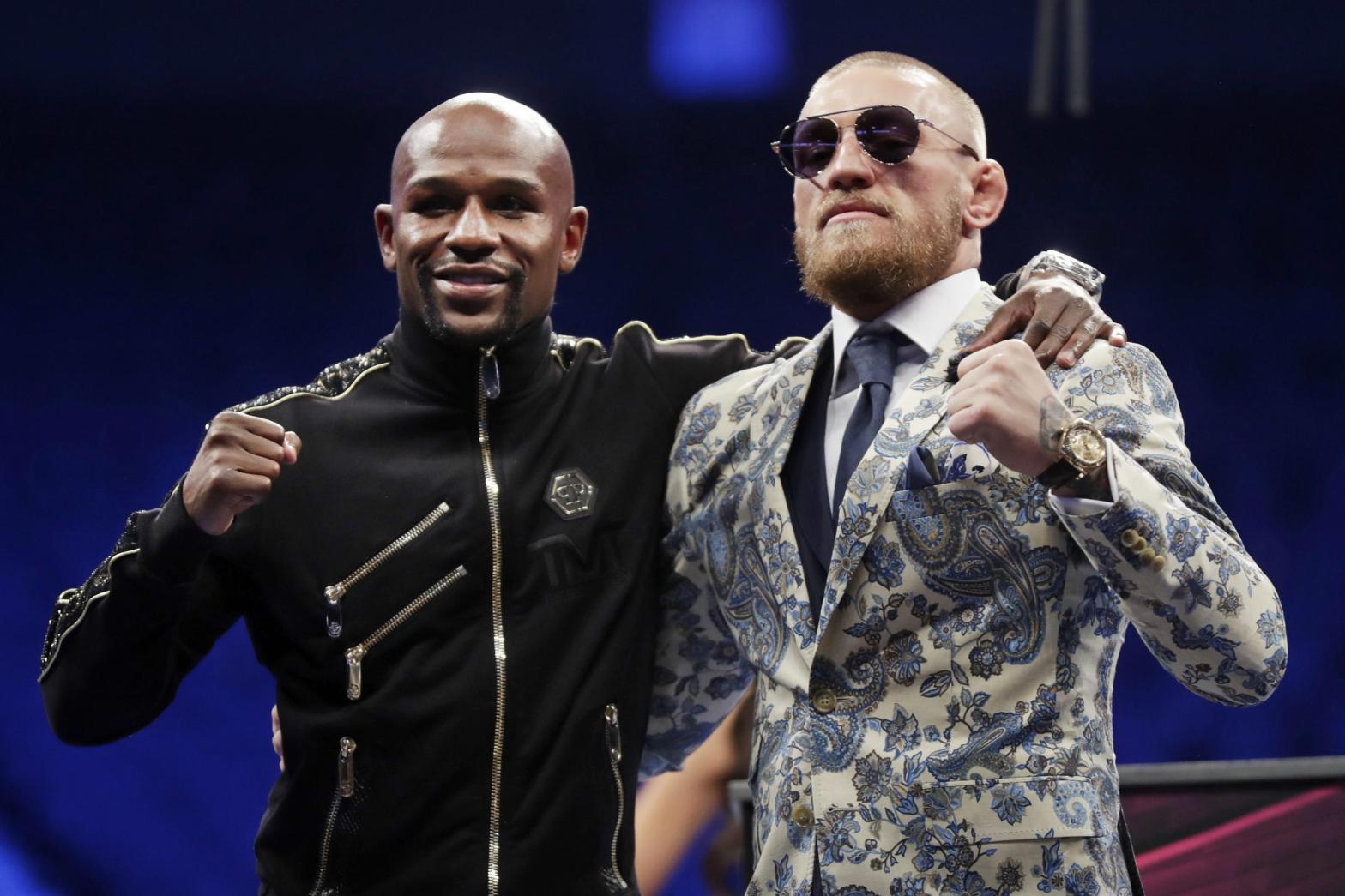
It’s fair to say this is the ‘Ronaldo vs Messi’ debate of combat sports. Both fighting styles have bolstered in popularity over the years for different reasons, Boxing being one of Britain’s trademark sports while MMA has expanded its brand awareness overseas very quickly ever since the establishment of The UFC. Despite the ongoing rivalry, both sports have worked together to raise the profile of combat sports to a mass-sporting market. 2018 saw one of the most revolutionary fights of all-time with undefeated boxing champion Floyd Mayweather battle it out against The Notorious Conor McGregor in the ring. This weeks blog will explore which sport is better equipped for future sports industry success.

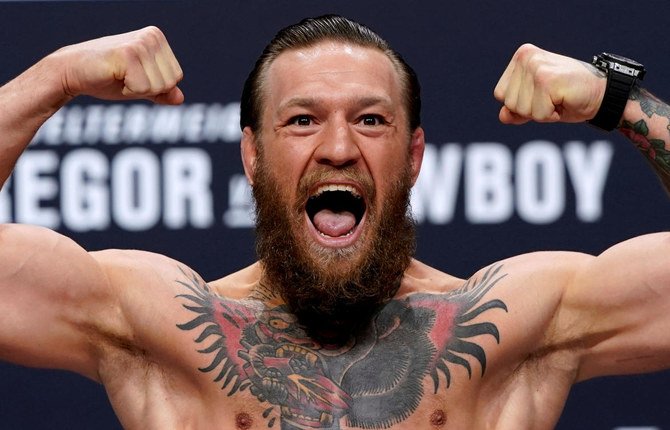
The UFC has been the largest tournament in MMA to put the sport on the map, particularly with the rise of Ireland’s Conor McGregor. The controversial star brought a new attitude and culture to MMA which is fuelled by trash talk, polarising comments and bringing a new definition to, ‘getting underneath your opponent’s skin’. The results speak for itself, 5 of the highest PPV buys in the UFC has been a McGregor featured event. Although, ever since Conor lost Russian starlet Khabib Nurmagomedov in 2018, the Dagestan born has become the poster boy of MMA’s leading competition, until he recently announced retirement last weekend after beating Justin Gaethje. Despite McGregor also being retired, he’s currently entertaining a rematch against US competitor Dustin Porier early next year for UFC257. McGregor could also be highly-anticipated to fight welterweight Manny Pacquiao in a boxing match as the Philippine international has coincidentally partnered with Paradigm Sports, who also manage Conor McGregor.

Boxing has also made a lot of noise over the years, particularly with some of the diverse characters they have punching their weight in the heavyweight division. Tyson Fury’s comeback since 2018 has drawn strong media attention not only due to his exceptional boxing resume, but also his resilience in overcoming mental health struggles. Watford local Anthony Joshua becoming the two-time world heavyweight champion has been instrumental to turbocharging attention to his division. Plenty other hot prospects are looking to make boxing history including Billy Joe Saunders, Devin Haney, Ryan Garcia, Katie Taylor and Canelo Alvarez. One event that fans are licking their lips about is the British heavyweight clash between Fury and Joshua, which could happen next year. Aside from this, the sport has recently taken a unique incentive to unlock its connection with Gen Z audiences by hosting ‘YouTube boxing’ events which have included KSI vs Logan Paul 2, Jake Paul vs AnesonGib and Jake Paul vs Nate Robinson next month.

MMA’s edge over Boxing

The MMA landscape is a fast-growing industry. Asian tournament ONE Championship has skyrocketed in commercial success particularly with it’s recent reality TV show ‘The Apprentice’, ONE Championship edition. The show provides a life-changing opportunity for a lucky contestant to work under CEO, Chatri Sityodtong. The organisation also has an esports championship series called ONE Esports. Initiatives like this keep MMA ahead of the curve, demonstrating there’s more to their brand than the end-product itself. The results speak for themselves; ONE Championship is the hottest sports property in Asia with 2.7bn potential global viewers, 563m international fans while the tournament is broadcasted in over 150 different countries.

US Sports property, The Professional Fighters League (PFL), is another tournament making every effort to captivate brand growth through immaculate fan engagement. The organisation released a new free streaming service called the PFL MMA app where fans can view classic match-ups alongside never-seen-before content. The PFL also struck a deal with sport & entertainment service, Wave.tv where the league will be broadcasted to a new demographic, Generation Y, who also have a 200m social media reach. Plus, the tournament has partnered with Socios.com to produce a ground-breaking initiative to optimise combat sports fan engagement. The US property has released blockchain fan tokens where consumers can be enticed into special prizes by directly engaging with PFL content.

The UFC has applied aggressive marketing tactics to grow its global empire to what it is today. The organisation always focused on its presence outside of the Octagon, which found UFC related events delivered in major cities like London and Tokyo. The UFC also identified the power that technology can bring to their fan experience when they went under a re-brand in 2015. This grew the brand’s popularity with younger audiences which gradually found big broadcasting deals with global sports networks ESPN, FOX Sports and BT Sport wanting a slice of the cake. The UFC has partnered with ACX music to engage their fanbase through streaming.

MMA has remained proactive throughout COVID19. UFC Fight Island has transformed into a significant success with viewership figures rising enormously, fighters were kept safe, and it kept its viewers content with sports content! What sets MMA apart from the traditional combat sports landscape is the evolution towards becoming a global entertainment business, with ventures being pursued out of the sector and in areas that are optimised with younger audiences who hold phenomenal leverage to generating results.

Boxing’s edge over MMA

Boxing has one of the most illustrious sporting histories in the world, and arguably, legends such as Muhammad Ali, Mike Tyson and Floyd Mayweather are athletes with much more significant profiles than UFC fighters across mainstream media. Global promotion company Matchroom Boxing has played an instrumental role in revolutionising the sport into a commercial enterprise which draws multiple audiences from different walks of life, challenging the status quo of the traditional sport.

Similarly to UFC Fight Island, Matchroom Boxing put on a world-class display in August by hosting Matchroom Fight Camp. This was a lockdown initiative to continue Boxing in an isolated environment which has culminated high-volumes of commercial interest across The Middle East and the USA. This incentive to continue sport keeps viewership figures afloat in the sport as the only way consumers can tune in is by purchasing PPV rather than buying a ticket, meaning broadcasting revenue has been a significant contributor to keeping the sport operating.

The boxing world hasn’t been afraid to keep its fan engagement model unorthodox. November 2019 saw a new dawn in combat sports entertainment where two global entertainers, KSI and Logan Paul, walked into the Staples Center in LA to bat six bells out of each other in front of millions online. The project polarised the general boxing audience but proved to be a game-changer at accumulating mainstream success in a way that hasn’t been experimented in combat sport. The trend continued with US creator Jake Paul take on UK YouTuber AnesonGib in Miami Fight night, and now see’s the US personality take on former NBA player Nate Robinson on the Tyson vs Jones undercard this November. This is sustainable for the sport on a sporadic occasion as it entices young tech-savvy audiences to buy subscriptions, PPV and streams to engage with their favourite personalities.

Boxers tend to receive greater media attention and commercial value than MMA fighters due to their contractual obligations. When boxers sign a deal with a significant promotion company, they have the right to explore other sponsor or brand opportunities to maximise their commercial income. However, in The UFC, their fighters are limited to exploring sponsorship opportunities solely with brands that the tournament are exclusively affiliated with. This has caused substantial distraught amongst the MMA community as it can put upcoming fighters off with competing in the UFC. Funnily enough, 50-0 Floyd Mayweather made more money between 2010-2017 than the entire UFC roster.  


So, which sport has a more robust business model? Currently standing, it’s MMA. The sport has scored some unthinkable wins pre and post-pandemic, including phenomenal social media reach, a prosperous international exposure, an aggressive marketing strategy and the attitude to be more than just a sport but instead a media business. Boxing has thought similarly, but it hasn’t quite hit the right tone of proactivity in the way the UFC has.

Christopher Winn talks about his journey towards the UCFB Global Institute of Sport

Today’s mid-week interview sees me speak to UCFB’s football business leader and football business consultant, Christopher Winn. Chris talks about his unique journey into sport, the power of networking, converting challenges into a way to build character alongside his invaluable nuggets of sports career guidance.

Q1) Chris, it’s fantastic to have you on Ash’s Sports Talk. Let’s kick this off by understanding how your career in sport began.

At a young age, I knew that I wanted to work in football. I remember sending out lots of emails trying to secure work placements, internships and not having much luck. Early doors, it felt quite different as most of my friends and peers were chasing more traditional industries

However, I knew it was going to be challenging, and I decided to follow the most-conventional route into the industry, that being to get a degree in something business-related, and follow this up with a graduate scheme accompanied by professional qualification. In my case, I went to the University of Bath to study Economics, which led me to a role at KPMG as an audit senior. After this, I studied an MBA at the University of Liverpool in Football Industries. Shortly after my Masters, I got picked up by Adidas as an Internal Controls Manager for their Northern European market. This was followed up by me joining Deloitte Sports Business Group as a Sports Business Consultant for three and a half years which now finds me at UCFB as a programme leader and football business consultant.

Q2) What’s really interesting about your sports career is that you’ve come from an external background in the finance sector whilst at Amazon and KPMG. On this note, how instrumental are transferable skills in the sports industry, and how did this make you stand out?

When it comes to transferable skills, it had a domino effect in my circumstance. While I was studying at the University of Bath, I had a work placement at Amazon as a Finance Analyst. I started out as an intern in the finance team; despite this, I was learning essential skills in day-to-day business operations. As we all know, football is a business meaning this experience was transferable. This also supported my role at KPMG as I was regularly number crunching, managing and communicating with a diverse clientele and other team members. These experiences also helped me develop more specific attributes, such as communication, work ethic and continuous professional development which are invaluable in sport.

Never take whatever your work experience is for granted as it can serve you well in mysterious ways. I found that when I got to my roles at Deloitte and Adidas if I hadn’t of come from prior experiences at the level of a global brand, I wouldn’t have progressed into sport the way I did due to the skills I built up in those environments.

With perseverance and faith for a healthier economy after COVID19, things will come together! It does take time, and this message is what I relay to my students at UCFB, you mustn’t lose sight, you will still have the opportunity to achieve that long-term vision with consistency and keeping your finger on the pulse.

Q3) You’re role at UCFB looks fantastic. Could you share more about what you’re responsible for and what inspired you to make the transition back into education from your position at Deloitte?

After three and a half fantastic years at Deloitte, I fancied doing something different as I achieved what I set my mind to within that role. I decided to take a summer break to think about my next move. My network was instrumental to my next career step, and something I learnt about the sports industry is it’s so large on the outside but small on the inside.

Throughout my time at Deloitte, I ran some day-long sports master courses at the Johan Cruyff Institute in Barcelona, where I came across an Alumnus from the University of Liverpool who had previously been a lecturer at UCFB. We got talking, and he thought I’d be an excellent fit for UCFB, he then spoke to his ex-colleagues at the organisation and the next thing I know I’m coming into UCFB for a chat about what I can offer. Essentially, I was in the right place at the right time, and my network played an integral role in where I am now.  

In terms of what I do, I’m the programme lead for the MSc Football Business at the Etihad Campus in Manchester, Wembley Stadium in London, as well for our Online cohort, where I teach topics specialising in finance, governance and regulation at masters level, as well as accountancy and finance at undergraduate level. Away from teaching side, I have other responsibilities including writing content, and representing the organisation when it comes to media comments on football finance matters across TV, radio and written press which has been a fantastic experience.

Q4) Back in 2019, you had a feature on Business Because which outlined your transition into sport from the banking sector. I noticed networking was a hot topic, could you share with the readers how you built an effective sports industry network and whether this is still applicable to this day?

I tell my students to make the most of the network available at University. This is what you’re paying for alongside your academia. You have a window of opportunity where you can reach out to so many people in sport, and the fact you’re studying a sport-related degree definitely gives you a leg up in that respect. Not only do you have connections within the University, but you also have relationships outside of the institute that the University knows which you could have the ability to contact.

The power of a network stands you in great stead for the future that can open up multiple avenues for you. During my masters, the Deloitte Sports Business Group used to come in and present to us, I made an effort to introduce myself, kept in touch and then came over to Manchester to meet with some of the team in person to seek career advice and guidance. A year later, I applied for a role within that team; they knew who I was, and I imagine this contributed to securing a position.

It’s also vital to remember that building a network won’t be spoon-fed to you. It’s down to the individual to have the courage to reach out, get a coffee with a connection, jumping on a phone call seeking career advice etc. It’s amazing how it works if you stay persistent, for example, I remember having a quick phone call with Chelsea FC’s Finance Manager some time back whilst job hunting which happened from me reaching out to him. It got my name out there and provided me with an opportunity to learn from someone at a senior level in the industry.  

My methods still stand to this day. Of course, the pandemic affects how many people you see in person; however, it could open up more free time in people’s diaries to hop onto a zoom/teams call, so use that to your advantage.  

Q5) Re-visiting your University experience. What differences have you found with regards to preparing students for pursuing a career in sport compared to your current role at UCFB?

It’s been a similar experience. Both periods have featured a dedicated careers team to ensure CV’s are relevant and exciting, which still counts to this day. For example, if I was reviewing a CV from an application to Deloitte while I was there and they hadn’t made an effort to demonstrate how their skills and experiences are relevant to the role, it wouldn’t be as interesting to look at. This is what the careers teams are great at doing, picking out how you can make your experiences applicable to a role despite yourself not previously having had much experience in the niche you want to move towards.

A key piece of advice I give to my students now is to remain patient, particularly in current times and the sports industry is a tough nut to crack early on. As mentioned earlier, capitalising on building a network is crucial, considering how well it served me. 

Q6) As we both know, the sports industry presents multiple obstacles to overcome due to its competitive nature. Would you mind sharing some of the challenges you’ve experienced, and, how have these allowed you to develop into an even more vital sports sector asset?

The greatest challenge I faced was persevering when times were hard. I remember while I was working at KPMG, I was taking my accountancy exams which was quite a stressful time for me. Every student had three attempts at the final exams, and I failed the same one each time by extremely narrow margins. I was self-funding retakes too which cost me a fortune, but I was coming right towards the end of my studies meaning I couldn’t give up. I even lost my job at the time as I was on a graduate scheme at KPMG on the basis that I’d pass my exams within the set number of attempts which didn’t happen whilst working there.

I then began to job search for multiple positions while also applying to take my exam for the fourth time which cost me an arm and a leg as I sent myself to the best college in the country in order to pass my final exam and qualify. Despite this, I still applied to do an MBA, which I’m very thankful for as they accepted me while I continued to finish my accountancy studies.  

Regardless of the exam struggles, it gave me a very thick skin, resilience to deal with pressure, disappointment and the knowledge that if you keep working hard and remain determined, you’ll get to where you want to go. It taught me exactly what it means to be emotionally pushed to the limit from a professional perspective, something I learnt from and contributed towho I am today. 

Q7) Chris, reflecting on this conversation and your sports career, what is your killer piece of advice for the next generation wanting to pursue a career in sport?

It comes down to patience; success doesn’t happen overnight as it took me nearly a decade to access to the industry. For sure, some will get into sport early doors, and that’s great for them, however, if you carefully craft your skill sets, network, competencies and vision, it will pay off.   


Wow, What a fantastic interview with Chris! It was very courageous to hear him openly speak about his struggles on his sports career journey that have built him to become a powerful asset in the industry.

The AST wrap-up: impact, impact, impact!

Welcome back to the AST Wrap-up! This week revolves around a new content partnership for boxing, a pioneering venture in Ligue 1, a new streaming service launching in Asia and more!

Could Anthony Joshua’s marketability skyrocket under new content-based partnership?

Anthony Joshua celebrating a victory

Two-time heavyweight world champion Anthony Joshua has penned a deal with PR company Soapbox London to deliver a new content studio and production home. Soapbox London currently manage AJ’s YouTube channel alongside producing content for renowned brands such as Hugo Boss, Turkish Airlines, Matchroom and DAZN.

The joint-venture aims to share Anthony Joshua’s sporting story to a broader audience through a powerful production; this could exist through a docuseries, live events, podcasts, brand campaigns alongside exclusive YouTube coverage.

The Watford local was recently named SportsProMedia’s 31st most marketable athlete of 2020 and who knows, with the right strategy and incentive, 2021 could see the Brit move higher up the ranks under the direction of Soapbox London.

AS Monaco sign groundbreaking ecommerce deal with Amazon

AS Monaco golden flag

French club AS Monaco has become the first Ligue 1 club to establish an online shop under Amazon’s platform. Currently, the clubs portal is accessible for consumers across Europes top club footballing nations; the UK, France, Germany, Spain and Italy.

The clubs playing and training kit will be available for purchase with other branded accessories supplied by Italian sportswear firm and technical partner, Kappa. The collaboration between AS Monaco and Amazon is integral for the brand growth of the French club as they join the likes of Bayern Munich, Inter Milan and Tottenham Hotspur with having exclusive agreements with the ecommerce giant.

The deal will undoubtedly underpin the international visibility of AS Monaco, which is healthy for Ligue 1 to challenge the current French football giants PSG off the pitch.

The Professional Fighters League aren’t playing games with their fan engagement strategy

Local fighter and former UFC veteran Vinny Magalhães, right, says the seasonal format of the Professional Fighters League has rejuvenated his career. Image can be found here: https://bit.ly/37PZvDt

The Professional Fighters League (PFL) aim to revolutionise fan engagement in sport with an exclusive blockchain fan token offer, in partnership with fan engagement platform Socios.com.

The agreement will see the PFL launch fan tokens as digital resources which provide consumers with the opportunity to engage in exclusive PFL initiatives, contests and polls throughout the fighting season.  Fans will also have the chance to earn authentic and virtual prizes linked to the PFL x Socios.com initiative.

Socios.com has previously partnered and worked with iconic sports properties including PSG, Barcelona, Juventus, Atlético de Madrid, AS Roma and more! Their initiative with The PFL continues to drift the sports industry into a digital overdrive where technology is becoming a fundamental factor in optimising fan engagement in every shape and form.

Asia gets serious about boosting the profile of Rugby

Image can be found here: https://bit.ly/35pjjuo

UK TV channel Premier Sports, is launching an Over-The-Top platform called Premier Sports Asia to broadcast the Autumn Nations Cup over 22 national markets. Fifteen live games will be hosted through the OTT Service, which begins on the 13th November, plus, tournament coverage will be available on multiple devices including smart TV, iOS, android and desktop. Subscription fees for the innovative service are $59.99 for a six-month contract or $19.99 per week.

This marks as a new dawn of opportunity for Rugby in Asia, a chance to captivate a new audience through the influence of sports streaming.

Major League Baseball stays ‘on fleek’ with their new Snapchat features

Image can be found here: https://bit.ly/3jrZFTB

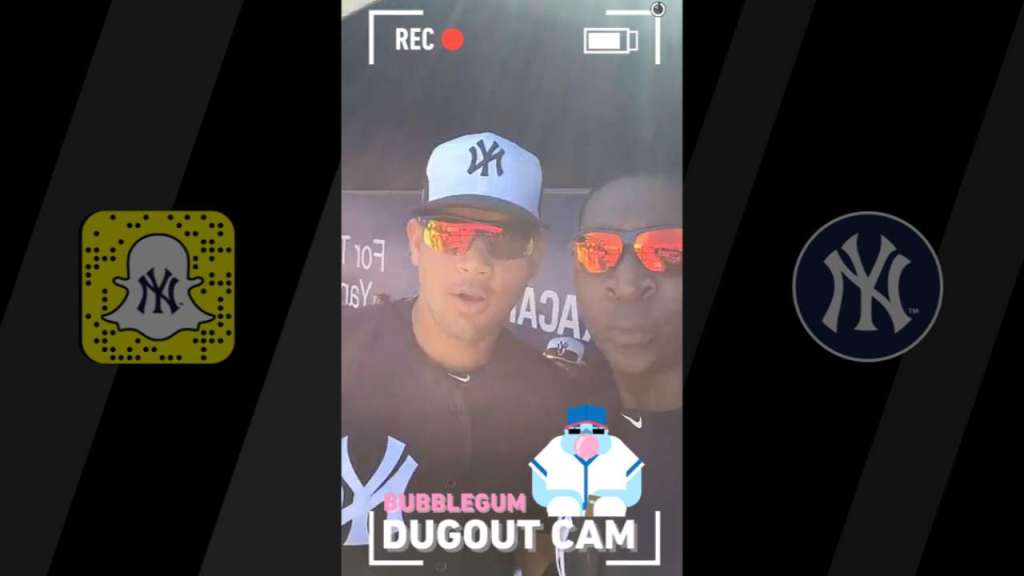
Major League Baseball (MLB) has introduced exclusive, and new features with Snapchat which sees the social media channel integrated into the MLB Ballpark mobile app. MLB has also welcomed a feature with Snapchat’s camera kit allowing fans to interact with eight unique lenses across the globe.

MLB and Snapchat have entertained an illustrious relationship for over five years; it’s fundamental for this to continue considering the growth of tech-savvy youngsters being identified on short-form media platforms like Snapchat which boasts 238m daily active users, 100m users in the US and a 120% growth in India.  


That’s a wrap! What impact will Anthony Joshua’s new content deal contribute to his marketability? How successful will AS Monaco’s ecommerce venture become in the long run? How soon until other MMA tournaments follow in the PFL’s footsteps to optimise fan engagement? How powerful will Premier Sports Asia be to entice new audiences to Rugby across Asia? Lastly, what outcomes can we expect with MBL’s joint-agreement with Snapchat?

How will Augmented Reality enhance future fan engagement in sport?

Augmented Reality (AR) has pounced into multiple industries, and it is here to stay. It has boomed in demand due to its influence to entice consumers to buy into further services and products that a traditional experience doesn’t fill the void for. The sports industry is a prime example; it has revolutionised the home watching experience for fans. COVID19 has turbocharged the growth of AR understandably as we’re forced to step into a new era of digitalisation while socialising remains limited. This weeks blog will discover the future impact AR will make towards viewing the game at home compared to the stadium.

Sports fans enjoying a beverage before a UEFA Champions League match. Image can be found here: https://bit.ly/3ohzGlv

During the pandemic, it has become imperative for sports clubs, partners and stakeholders to keep their supporters connected throughout these unprecedented circumstances. With the lack of spectator attendances at sports stadiums, there’s no other choice than to make the home watching experience an extraordinary one.

Live digital stats during match-play, image can be found here: https://bit.ly/3m9aQlQ

BT Sport and EE are two parties that are attempting to fill in this void through an AR partnership allowing BT Sport consumers to access a virtual in-stadium experience through the BT Sport app. The app will enable fans to watch games together through a watch together feature, gain rights to viewing in-game stats such as pace and distance coverage alongside giving fans a 360-degree virtual stadium experience allowing them to explore different parts of sporting venues. This innovative joint-venture keeps BT Sport and EE ahead of the sporting curve by developing their collaborate fan engagement strategy into the next phase of digitalisation. It will lure their current audience and new audiences to jump on the wave of modern sports entertainment.

Valencia AF matchday picture, image can be found here: https://bit.ly/3kqhZ0E

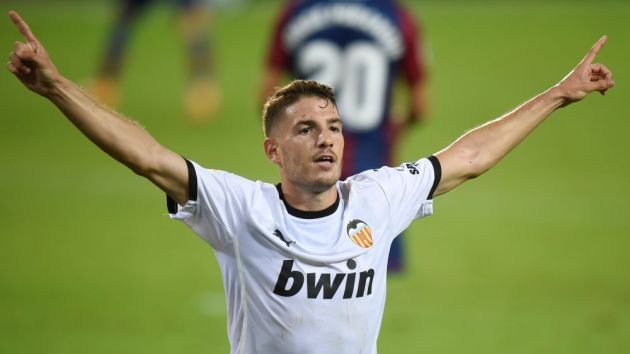
Spanish soccer club Valencia AF is the first La Liga club to form an AR partnership which will integrate AR through their mobile app with the Canadian tech company, ImagineAR. The newly developed app will not only provide Valencia fans with a new pathway of entertainment but allows Valencia to collect further marketing intelligence on their audiences to generate a more robust understanding of their consumers.

Valencia’s involvement in AR isn’t only for their consumers and their benefit; this recent partnership is a follow-on project from the initiation of ‘Startup Valencia’ back in 2017. Startup Valencia is a private & non-profit company designed to focus their attention on upcoming innovations within smart stadia and sports medicine. Not only is this a jaw-dropping time for sports fans, but also a new financial revenue opportunity for sports businesses.

NBABet Stream screenshot, image can be found here: https://bit.ly/3otGxsb

The NBA has been impacting big time through AR as the league established betting-focused telecasts earlier this year. This entails in a broadcast option allowing consumers to stay updated with live betting odds. On this note, sports broadcasting will benefit enormously from AR’s integration in the at-home experience. Global sports media rights are worth close to $50bn this year, which is heavily leveraged by sports broadcasting for major sports. This financial worth has a strong possibility to increase considering the impact AR brings to delivering engaging broadcasts which will result in higher traffic to the broadcasting channel.

Digital mosaic of Andy Murray, image can be found here: https://bit.ly/3mhYqIe

Despite mass spectator stadium attendances still being unconfirmed in sport, what could AR integrations look like upon consumers returning? Well, seeing the popularity rise for fans tuning into virtual broadcasts in-stadium video boards, this could become a sales opportunity for sports stadiums to boosts profits. For example, allowing season ticket holders/premium broadcast subscribers the largest space on videoboards, a virtual social media MOSAIC during the half-time break alongside digital avatars available to download through club apps providing live consumer updates on a particular factor during a match.

Whether you’re a supporter of AR for the home or in-stadium experience, it has revolutionised fan engagement in every shape or form. It’s connected global fanbases in a way that hasn’t been seen before through technology, and the influence is only going to grow. The home viewing experience appears to be captivating sports fans efficiently through exclusive features to access throughout live sports broadcasts which allow the consumer to feel as if they’re in the stadium. AR’s leverage for home watching experiences is only building up the appetite for fans to return to sports stadiums.


What do you think the future could hold between AR and fan engagements inseparable relationship? Could broadcasting revenue become the most significant contributor to sports finance? Will the industry begin to operate entirely from data-driven insights? Plus, is this a healthy transition for an ever-evolving world of sport?

Ash’s exclusive interview with Clare Barrell, Senior International Relations Advisor at UK Sport

Clare Barrell is UK Sport’s Senior International Relations Advisor, driving the mission to ensure the UK has a strong, respected and supportive voice in international sport. With over ten years of experience working in international sport development and international relations, Clare’s leadership, management and passion for promoting the positive values of sport in the sector has been integral to where she is today. This interview sees Clare discuss where her career began; the power that volunteering has and her advice for the next generation pursuing a career in the sports industry.

Q1) Clare, it’s great to have you on Ash’s Sports Talk. Would you mind sharing how your sports career began?

Thanks for having me, Ash! On reflection, it started as a 5-year-old, insisting I join my brother playing mini’s rugby and having a taste for the sport, the mud and running with the ‘boys’ every week. Rugby has been a bit of a golden thread throughout my life, but back to that later.

I studied Politics and International Relations at Manchester University and had a series of volunteer sport roles on the side. As an undergrad, I worked with a peer to initiate and deliver an outreach programme in South Africa; a sport coaching intervention with the charity SOS Children’s Villages. This laid the foundation of a deep admiration for and interest in sub-Saharan Africa and the power of sport, and one that I have been fortunate to harness in my career.

After working for the Sports Unions for both Manchester and Sheffield Universities, I knew I wanted to combine my degree and my belief in sport as a tool for good, but I didn’t know how. I sought a meeting with UK Sport’s International Development team as it was then, and the advice was clear ‘if you want to ‘do’ this work, and be credible, you should go and do it.’ She advised me of a post part-funded by UK Sport and the Voluntary Services Overseas (VSO), and I knew this was the path for me. I rejected the traditional postgraduate route, applied, and after a rigorous selection process was accepted to a two year posting in South Africa as a Team Leader for NGO ‘Score International.’

Q2) I can see many of your career appointments have been volunteer orientated, particularly at the University of Manchester, VSO and SCORE International. How important have you found these positions to promote more volunteers in sport, and could you share how vital volunteers are in the industry?

You are right, my early roles all involved working directly with volunteers, and then taking a leap of faith as a Voluntary Services Overseas (VSO) volunteer working to support other volunteers from all over the world. Volunteers are so often the backbone and lifeblood of sport. Finding ways to attract, train and retain volunteers, with incentives that recognise, and the reward was a consistent theme in all these roles.

It was SCORE that truly opened my eyes to the importance of volunteers in communities; it was (and still is) volunteers that are so crucial to SCORE working towards its vision ‘to change lives and build stronger communities through sport.’ Without the network of volunteers, my job to deliver programmes would have been impossible. The generosity of community volunteers I met in SCORE provided me with an entry point, a safety net, an education and the skills and tools I needed to navigate through some of the most violent, dangerous and impoverished communities in South Africa. I remain in awe of those volunteers and inspired by their unwavering commitment in humanity that meant they would not let the negative legacy of apartheid South Africa prevent the drive for better.

I do not wish to over romanticise here! Volunteers need support, recognition, training and rewards, and they come in all different packages, shapes and sizes, but with the right backing do genuinely magical things.

Q3) Your current role at UK Sport looks fantastic. Can you explain more about what it entails and what your position looks like day-to-day if there’s such thing?

Pre-Covid there were a lot more airports and passport stamps involved! As the Senior International Relations Advisor it is true that no two days or weeks are the same….

Still, an average week will include the following components: a phone call with a CEO or Chair of a UK NGB to discuss an emerging international issue in their sport and to provide advice, a project meeting to lead the development of an International Partnerships Programme (IPP) initiative, involving international stakeholders (different time zones!) and strategic partners; conversations around how to enhance the UK’s voice and impact internationally in targeted policy areas, team and line report check-ins, overseeing our team strategy development process, delivering webinars for the UK network of international sport representatives on issues of topical interest, engagement in cross-business programmes .. and managing around a three-year-old!

Q4) I see you’ve been in your current post for nearly two years now and you progressed from a non-senior role. What did you find the critical values were to advance your career to the next level at UK Sport?

I joined UK Sport on a part term maternity cover. I had the interview on a mobile phone from a broken down car in South Africa, and I only saw the advert because a colleague put it under my nose, so to reflect on nearly ten years is interesting! I have always cultivated and maintained an active and live network across sport, international sport and sport for development and sought ways to add value to our team and broader UK Sport by feeding in wider trends and considering ways we can innovate. I think an ability to focus on both the task and the team and to maintain and generate high team aspirations is something I have always tried to bring. High levels of cultural and emotional intelligence are the backbone of our International Relations work and crucial to getting work done.

Q5) It’s clear you’ve had a successful sports career that has undoubtedly consisted of hard-work, determination and commitment. However, what have you found the most challenging about working in sport and how have these challenges moulded you into a more resilient asset?

I’m not sure what one thing I find most challenging, but I like to challenge, and I like to challenge the status quo, but as this is International Relations, the crucial part is to do it in the right way. I have been confronted with many scenarios in international sport whereby it’s ‘just the way it has always been done. I seek first to understand (gather as many facts, opinions and different viewpoints as possible) and then I have learned to use collaboration, partnership building and influencing to work to do things better. An example; in international sport governance we have a considerable challenge linked to the lack of women in decision making positions, working with global partners to find solutions to addressing this gives me a tremendous amount of satisfaction and the motivation and resilience to advocate for what is right, even when it may be unpopular.

Q6) Clare, reflecting on your career thus far, what is your killer piece of advice for the next generation to pursue a career in sport?

Shake off that imposter syndrome, know that growth comes with operating outside your comfort zone, self-reflect, be willing to do the hard work, understand where you can genuinely add value and find a way to get there. Don’t forget to respect and value all those you meet along the way.


Wow, what an interview by Clare! There’s so much to learn from her roller-coaster of a journey. She embraced challenge regardless of how big or small it was, valued every individual despite their level in the hierarchy and reminds us of the impact sport has to impact and change lives.

The AST wrap-up; your weekly edition of sports business news

It’s the end of the week, and you know what that means, it’s time for the AST wrap-up! This week, SportsProMedia have officially finalised their 50 Most Marketable sports properties, brands and athletes for the year. A new gaming giant is growing across the Chinese esports landscape; the UFC could welcome back fans, EE revolutionise the home-watching experience for BT Sports consumers, and Disney undergo a total restructure.

The FIFA World Cup is officially the most marketable sports property of 2020

The France National football team winning the 2018 FIFA World Cup

The UK-based media company, SportsProMedia, released their ground-breaking directory of the 50 Most Marketable (50MM) global sports properties of 2020, which saw the quadrennial football tournament listed in the no.1 spot. The Olympic games, NBA, Real Madrid and the Uefa Champions League were close to follow after the World Cup.

Universal sponsorship currency, SponsorPulse, were responsible for carrying out a methodology to determine the final results for SportsProMedia’s 50MM listings. Over 30,000 people per month across 18 of the worlds largest sports markets were utilised in the study to accurately measure peoples behaviours, attitudes and emotions towards the global sports properties. The seven key metrics that define the outcomes on the list include engagement, intensity, momentum, passion, excitement, purchase consideration, and favourability.

SportsProMedia also carried out a sports marketing study for both sports brands (powered by Hookit’s SportGraph) and athletes (powered by Neilson). International sponsor giants Nike, Emirates Airlines and Adidas made the top three in chronological order as the most marketable brands alongside Lionel Messi, Cristiano Ronaldo and Lebron James being listed as the most marketable athletes.

Through the power, investment and detail within data-driven technology, the sports industry has never been exploited to such terrific opportunities to investigate and benefit from the true value of sports marketing.

A new Chinese gaming giant is on the uprise

Snapshot of the Blizzcon convention

Video game publisher Huya has penned a stock-for-stock merger deal with streaming service DouYu to establish a live online gaming streaming giant in China. The agreement will forsee DouYu receiving 0.730 US depositary shares of Huya, which will see the deal close in the first half of 2021. According to the multi-sector firm, Bloomberg, this collaboration will develop an entity withholding a market value of $11bn+.

The partnership also involves multinational tech firm, Tencent, as they own 37% of Huya and 38% of DouYu. Tencent will hone their efforts towards live stream gaming underneath the Penguin esports brand to DouYu.

Huya is the largest live streaming platform in China accumulating 168.5m active users in Q2 of 2020, whereas DouYu acquired 165.3m in the same Q. This venture will spark a new wave of competition in the Chinese gaming scene, through an innovative collaboration that will fire up esports’ prominence across the traditional sports sector.

Could we see spectators return to The UFC?

Snapshot of fan attendance at a UFC event

UFC fans potentially have lots to be excited for considering Abu Dhabi’s Departure of Culture & Tourism’s marketing director, Saeed al Saeed has entertained a possibility for UFC supporters attending events at Fight Island. Fight Island is a lockdown project initiated by The UFC’s President Dana White to continue combat sports major tournament behind-closed-doors at Yas Island in the United Arab Emirates.

The UFC has produced some outstanding results throughout the pandemic. Including UFC251 yielding 1.3m PPV buys which saw Nigeria’s Usman remain victorious against US competitor Masvidal, The US fighter and Russia’s Khabib Nurmagomedov are listed in the 50 Most Marketable Athlete’s of 2020 alongside The UFC being recorded as the 40th most marketable sports property this year.

Bringing fans back will be instrumental in building on The UFC’s commercial growth in this unprecedented period. Particularly as the first event fans could return to would be Khabib’s bout against US lightweight Justin Gaethje while The Notorious Conor McGregor is entertaining his supposedly accepted bout against Dustin Poirier to be held at the AT&T Stadium in Arlington, Texas.

EE’s new AR initiative modernises the matchday experience through the BT Sport app

Stock image of lady taking a picture at a football match

UK mobile network EE announces ‘matchday experience’, an AR platform offering consumers an innovative in-stadium experience through the BT Sport app. The two parties have collaborated to form a watch together feature, allowing fans from different locations to tune into watching an event together.

Sports fans can access 360-degree viewing options through a ‘pinch and zoom’ feature, leaving supporters in control about where they view the game. The medium will also obtain a ‘manager mode’ element, again providing consumers with a unique experience to identify live stats such as distance covered and average speed. The fan engagement only gets stronger with the apps ‘stadium experience’ component, which provides fans with the opportunity to explore their favourite team’s dugout, dressing rooms, trophy rooms and other behind-the-scenes areas. 

BT Sport and EE have adopted these functions from other successful mediums. The watch together feature is similar to Netflix Party and Disney’s Group Watch feature, which has proven sufficient to fill in the void of limited socialising during lockdown. The 360 view feature wouldn’t have been possible without global streaming software Tiledmedia who are responsible for the watch together and ‘pinch and view’ features. 5G technology has been a significant driver for BT Sport and EE to revolutionise modern fan engagement in sport. 

Disney announces radical restructuring plans to centralise content distribution

Image of Disneyland

The US media giant will be dramatically scaling its streaming products from experiencing an enormous rise in traffic during the coronavirus. Over the last 12 months, Disney’s new Over-The-Top streaming service, Disney+, has acquired over 57m consumers with 33.5m subscribing since Q2 this year. Disney also owns ESPN+ which has accumulated 600,000 new subscribers in three months during Q2 of 2020, an imposing development considering the absence of sport. US on-demand service, Hulu, also owned by Disney, has seen 2m more subscribers sign up to the platform during the same period.

The restructure will involve the initiation of a new media and entertainment distribution group which will be accountable for monetisation of ad-sales and content distribution of Disney’s streaming services. Disney’s former president of consumer products, gaming and publishing, Kareem Daniel, will oversee this new initiative. This then leaves chairman of direct-to-consumer (DTC) and international division, Rebecca Campbell, to report to Daniel regarding Disney’s core services: Disney+, Hulu+ and ESPN+.


That’s a wrap! Do you agree with the FIFA World Cup being listed as the most marketable sports property this year? How will Huya and DouYu’s stock-for-stock merger change the Chinese esports landscape? Would you entertain fans returning to The UFC? How soon until other sports broadcasters begin to imitate and build on BT Sports x EE’s AR incentive? And, what impact will Disney’s restructuring have on their commercial growth?